All in-game footage in this blog post comes from an EA beta build and may differ from the final game.
Not a fan of reading? Check out the dev vlog instead!
Ah, Vagabond! How nice to see you again! Come on in, have a seat by the fire! The vibrant summer sun is slowly turning paler, winds are getting chillier and some of the leaves are starting to turn crisp. Nature is once again reminding us that fall is soon at our doorstep. For the team behind ATMOSFAR, this means that we’ve now returned from our summer break and are ramping up to our normal production speed once again. However enjoyable it might be to take some time off, we’ve got a game to release! And we look forward to it!
While we’re at it, we’d like to thank all of you for your patience and support. We know that you are looking forward to the EA release as much as we do, and that you’ve been waiting for it a long time. Having your support means a whole lot to us, and we are doing everything we can to get ATMOSFAR to you as soon as possible. Until then, we’d like to advise you to keep an eye out on our Steam page or join our Discord server for the latest updates on the game.
In our last dev blogs, we’ve been able to learn about different aspects of game development, and how they are combined to form the unique experience that we call ATMOSFAR. Today, we’re going to continue this series (because there are still important aspects of game development we haven’t reached yet!), by learning about the processes behind a large, but extremely central discipline: Level Design. To guide us through this topic, one of our Level Designers has graciously offered lend a hand. The stage is yours!
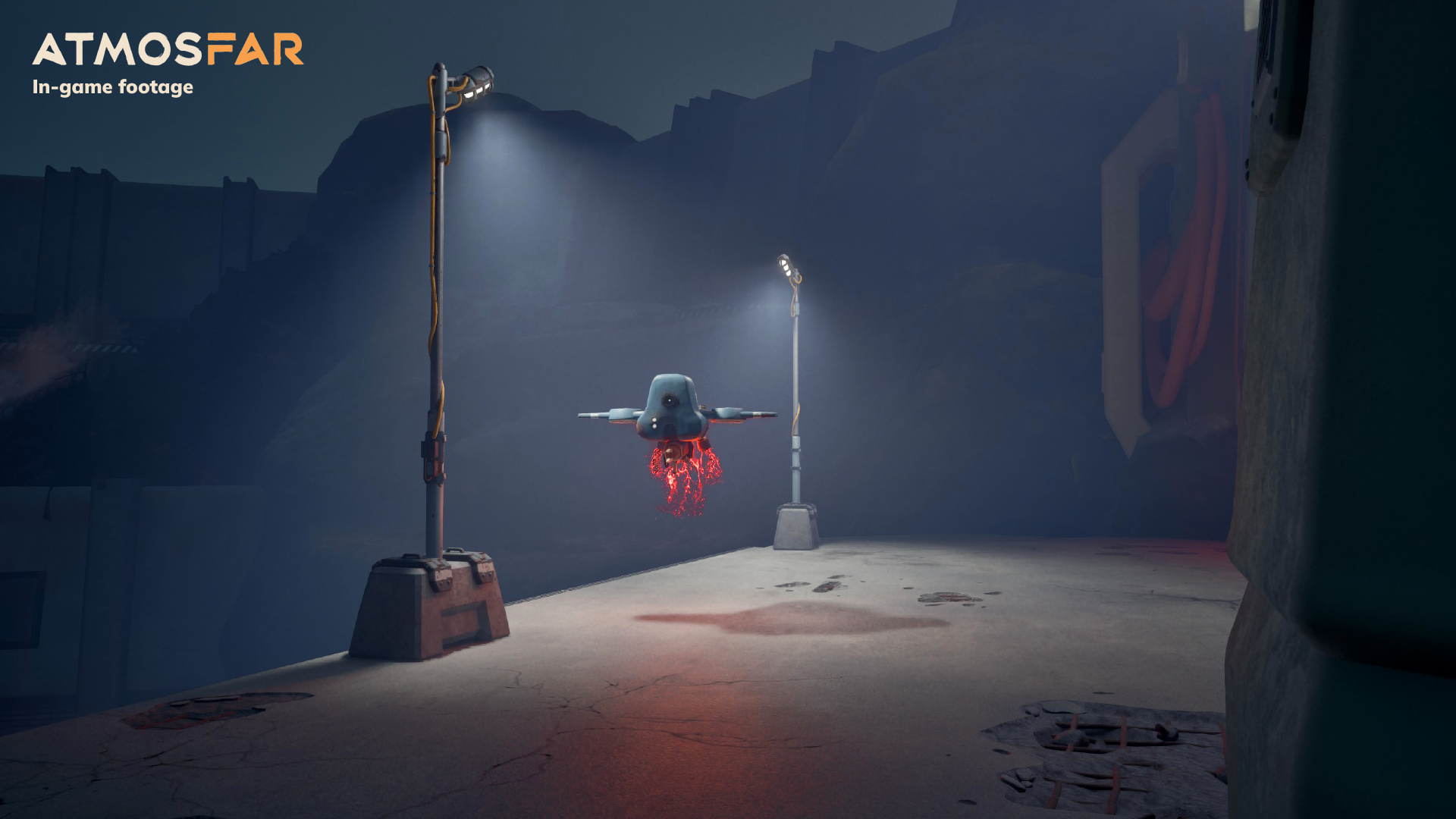
“Level Design is essentially designing and building the areas that the player will experience; the layout of the space and placing the gameplay elements that go in it. For ATMOSFAR, this means designing the layout of POIs (Points of Interest) and entire islands.
POIs differ in size, sometimes it is simply a lighthouse or a crashed crate. For a bigger POI the process often starts with RnD (research and development) which include gathering inspirational pictures and doing rough sketches of the layout. Sometimes we take a screenshot of the intended area and request a paint-over from the art team as part of gathering inspiration.
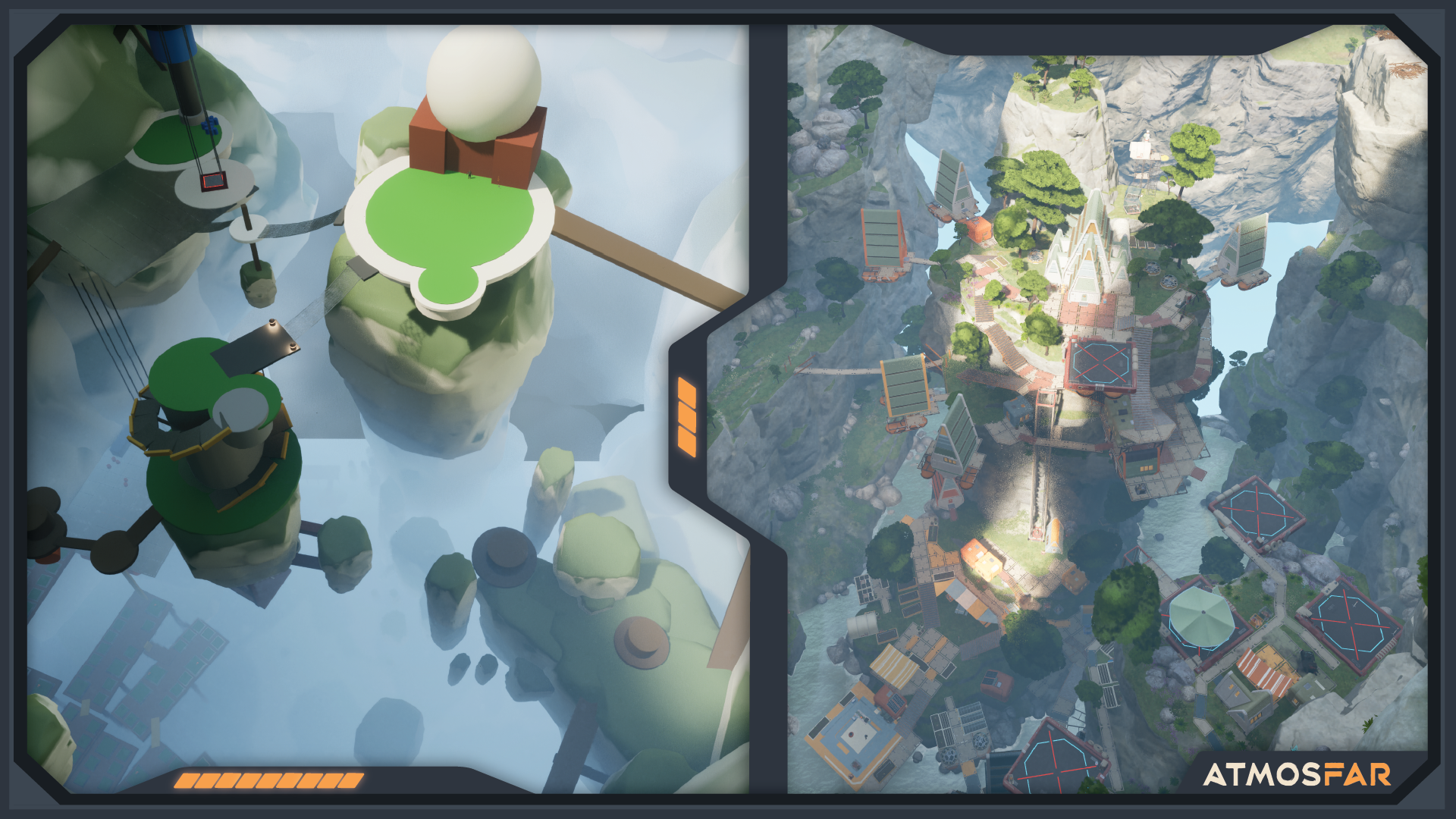
The next step would be to do a rough blockout. Earlier in production we built the POIs with basic shapes to test out the layout and size with the player character to make sure the space isn’t too small or too large and that the metrics (slope angles, jump and jetpack distance, and vaulting height) are correct. In later production, we started using finished art assets from the start to do rough layouts. When we feel like the layout and size is good, we go in to add gameplay elements like resources and challenges. The final step would be to have the art team come in and add that final touch to give the area the right feeling.
Throughout the steps we would ideally playtest and iterate upon the space, a process that never really stops because you always find something you want to tweak.
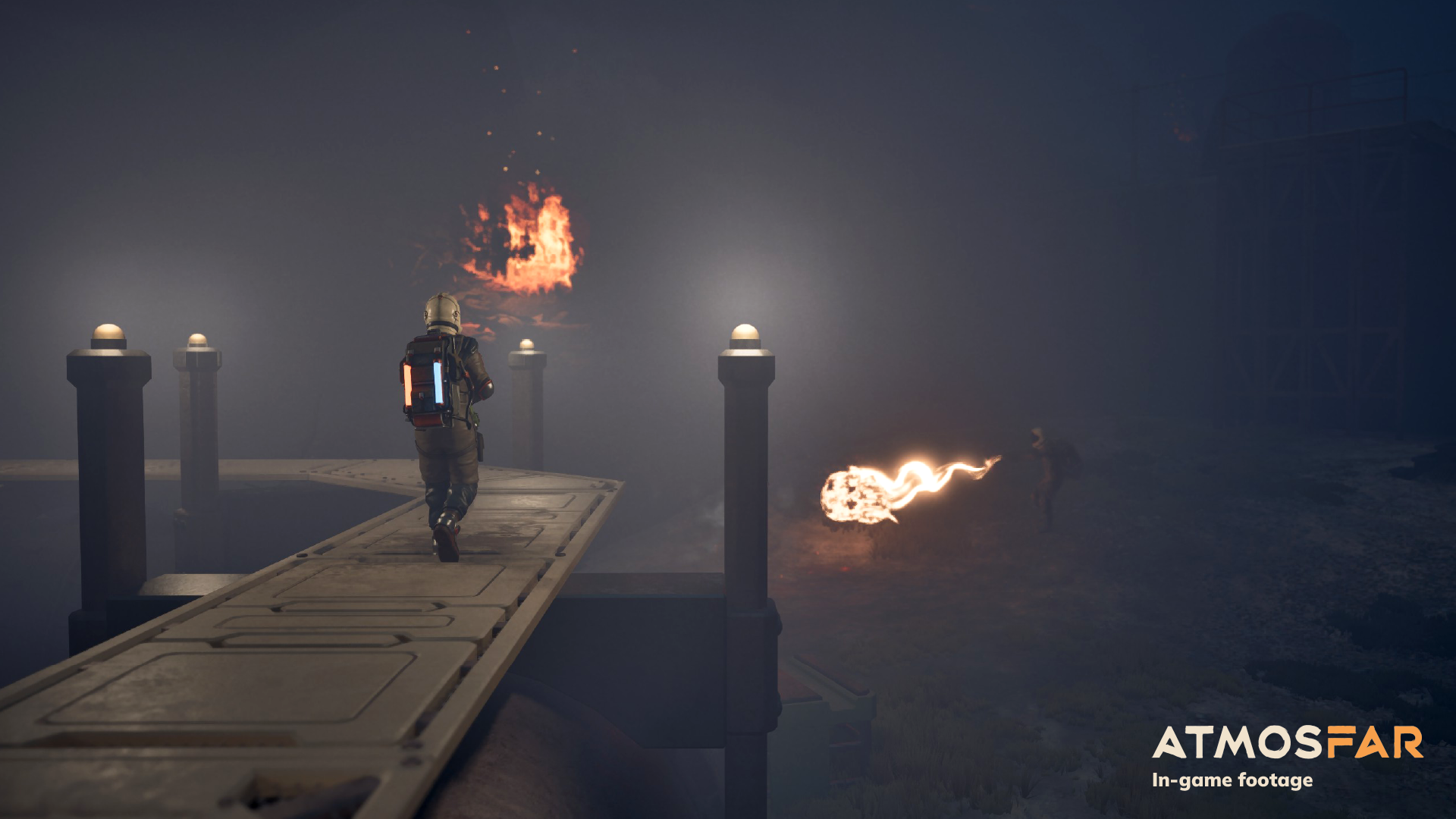
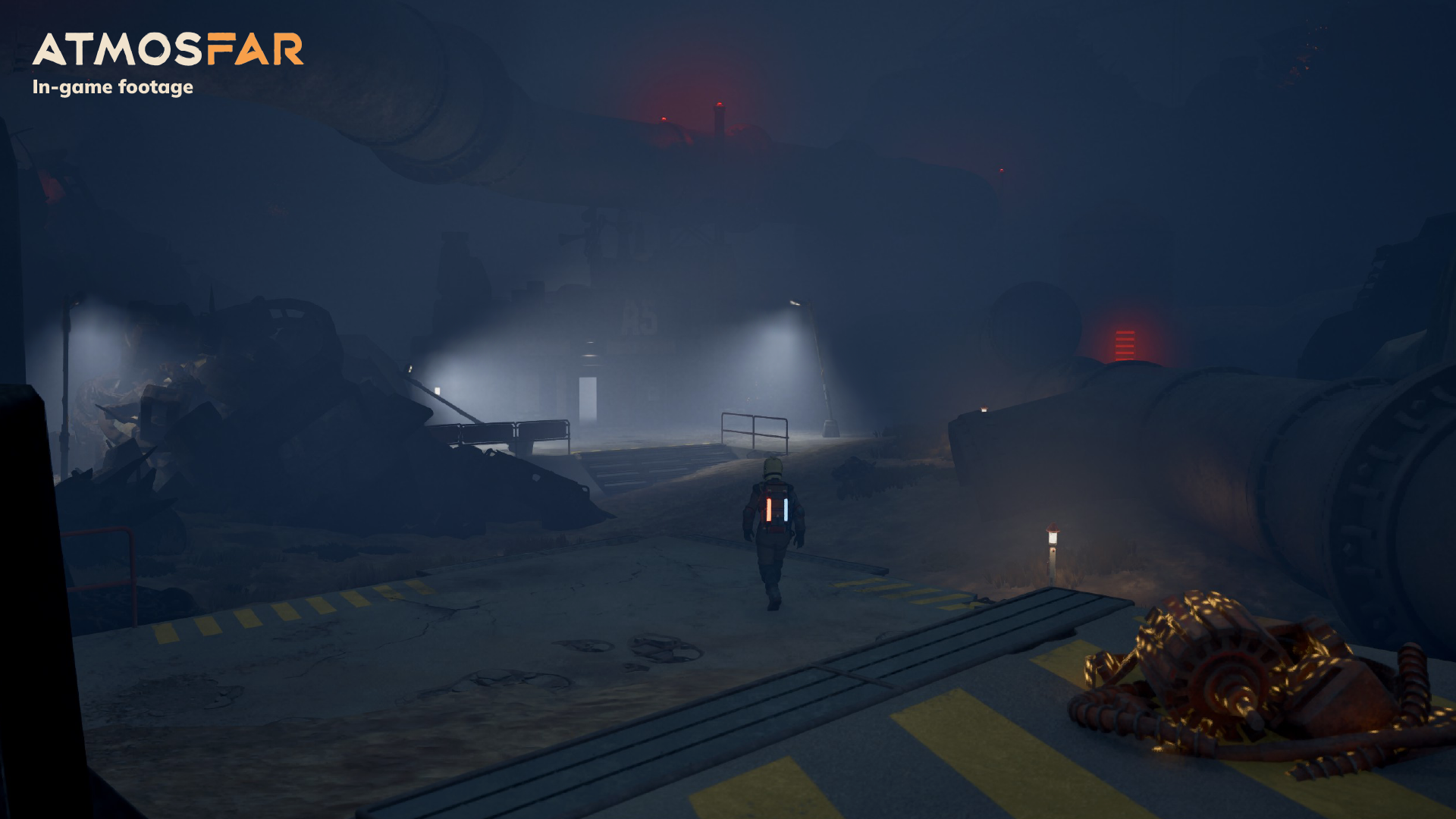
We also need to figure out what the player’s goal should be at a specific location, keeping in mind what tool and puzzle mechanics they have learned, what faction the POI belongs to and sometimes the history of the place. All these things can influence the design. We also need to plan how the challenge will increase, if the player will learn a new mechanic and what the tutorial for that will look like. These elements are often tweaked during production and therefore so are the designs.
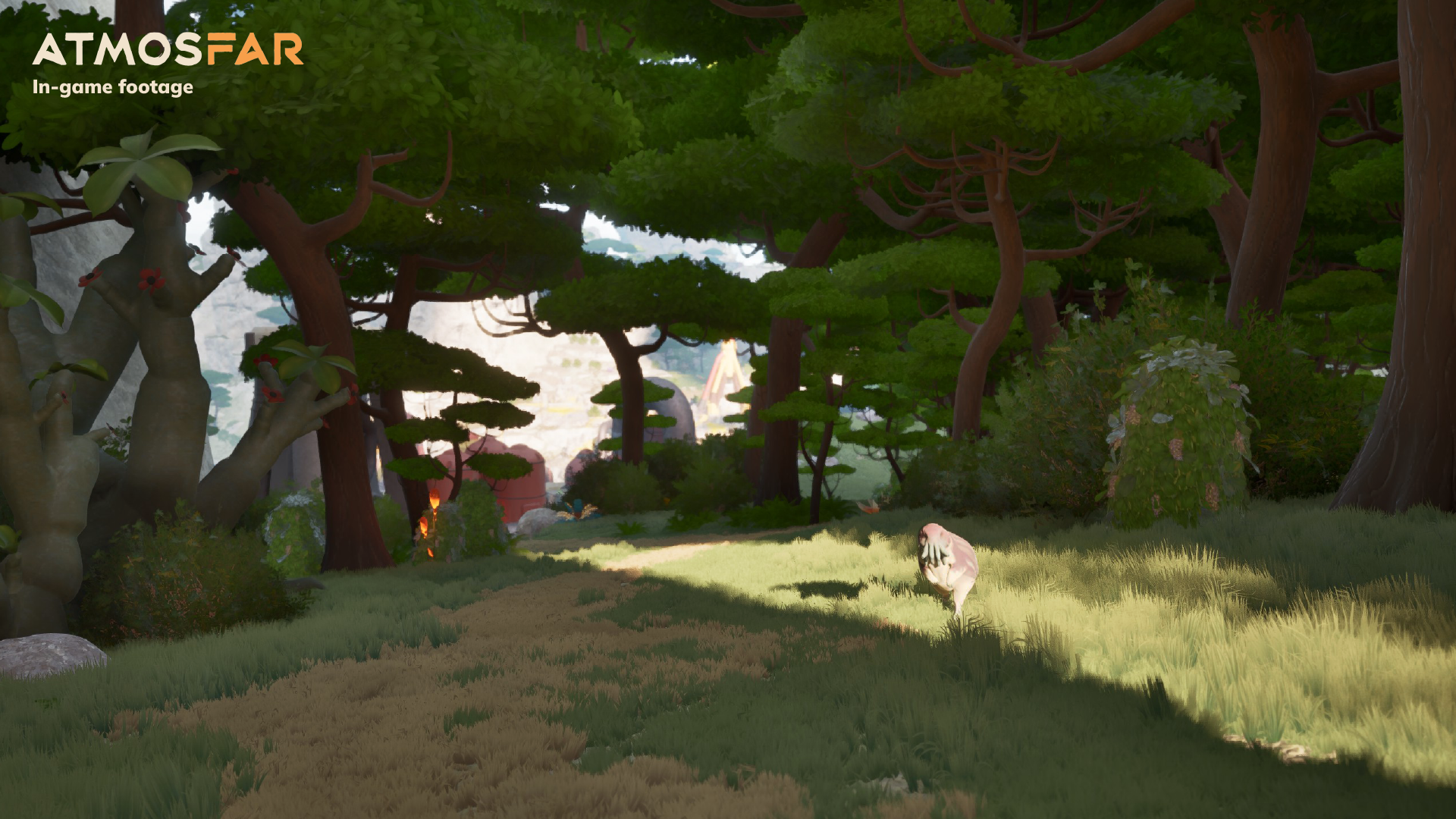
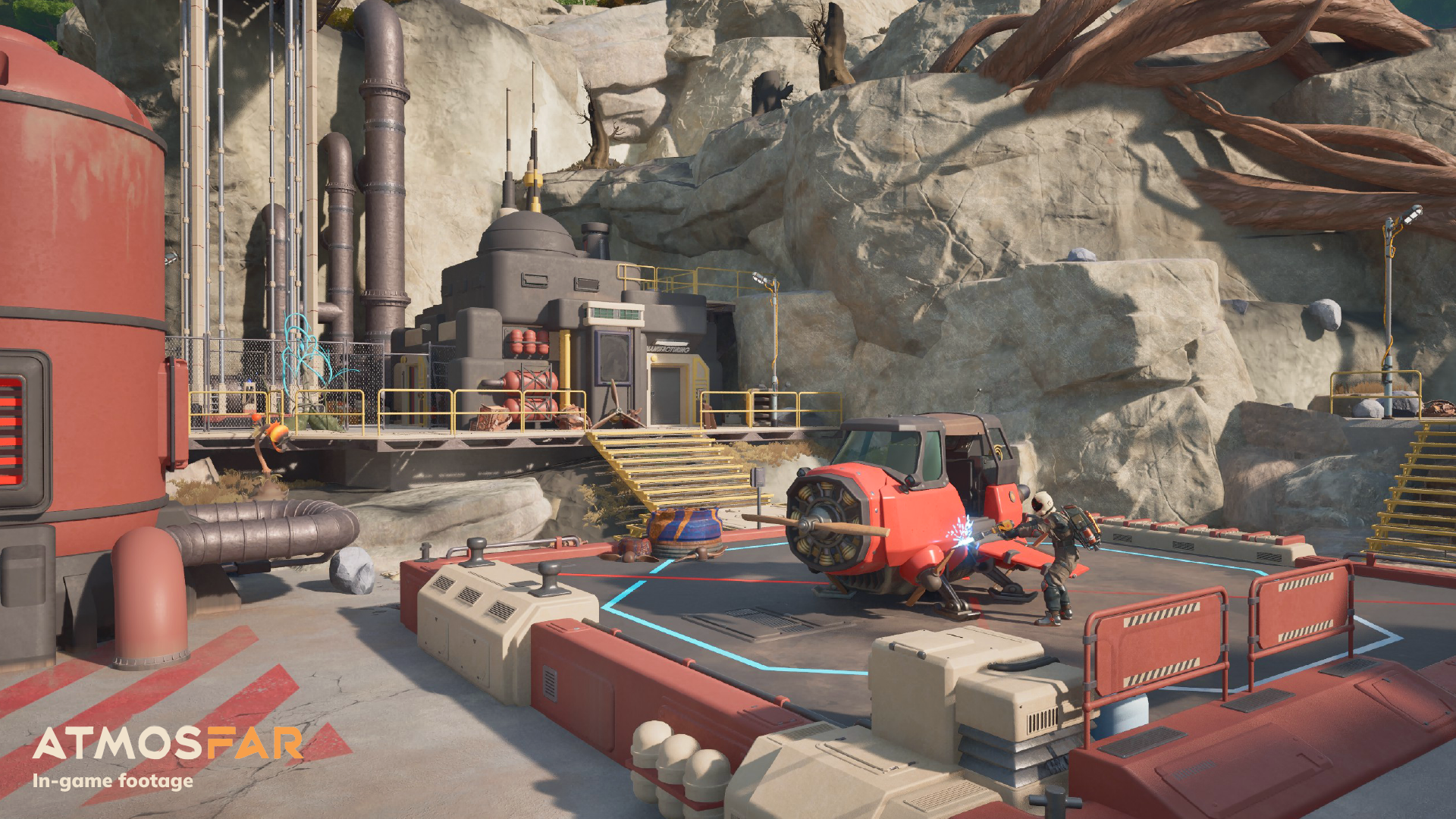
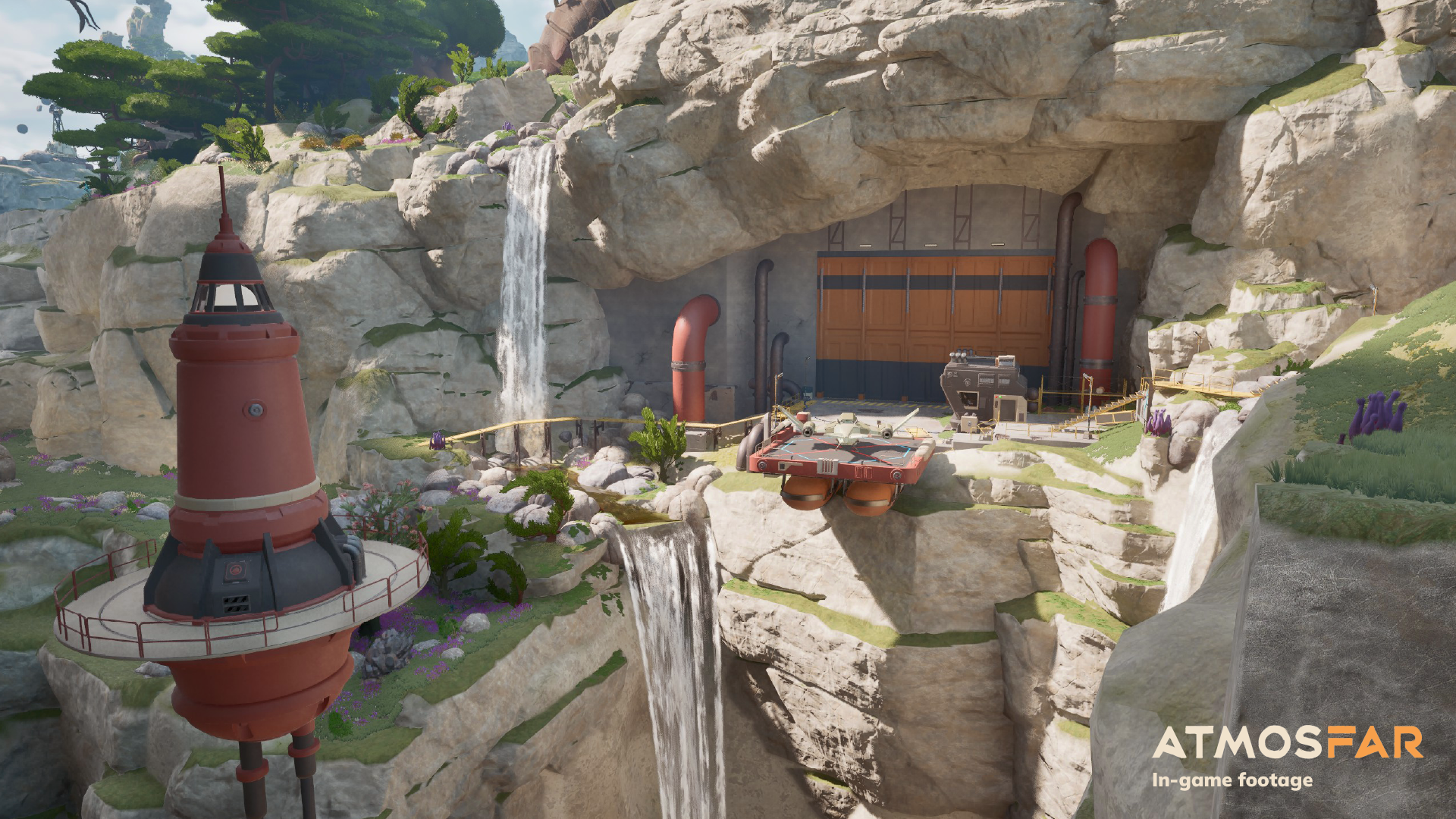
Since ATMOSFAR is an open world game where the player has Wasps and a jetpack, we can’t really dictate where they will land and where they will approach a POI from and therefore can’t design from a linear perspective. Instead, we need to think of POIs as biomes. A biome has a certain flora and fauna, the player can find specific resources tied to that biome, and there may be unique dangers that they need to look out for. As an example: a PACE POI “biome” would often be caked in concrete and pipes, where the player might run into hostile drones, but also solve puzzles and find a variety of scraps.

We can still guide the player in certain ways or help them navigate. We work a lot with composition/framing and landmarks. The player should be able to see something interesting that they might want to explore from certain points of an island or up in the sky or arrive at a POI and quickly realize if they’ve already explored it. If you play multiplayer, you should be able to describe an area to your friends to help them navigate.

I’m eager and curious to see players experience and navigate the islands and the POIs for the first time. Seeing people running around in the areas we’ve built will be both exciting and scary, but most of all it will be valuable to me as a designer. I hope everyone who plays will have fun exploring and I’m curious which areas will be the most popular camp spots!”

Yet another interesting breakdown from one of the team members here at the studio! Game development is essentially one giant collaboration across different disciplines and fields, and Level Design illustrates this very well. In this example we got to see how our Level Designers must keep track of art direction, game design, challenges, story line, lore, composition and readability in order to successfully create an interesting and exciting POI. That’s a lot of things to keep in mind at the same time!
Yes, there is still more to game development than the subjects we’ve gone over this far! Sometimes it can seem like it is never ending… But we will get to the end of it! Eventually…
Anyways! For the next dev blog, you can expect a continuation of this series. Next time we will however move away for art slightly. The main topic of the next dev blog will be about code! Or programming, or software engineering or development or… Well, you get it. “A beloved child has many names”, like one would say in Swedish.
Speaking about code… Maybe it’s time to get back to work before something breaks. See you in the next dev blog, and thank you for being here!
// Apog Labs