All in-game footage in this blog post comes from an EA beta build and may differ from the final game.
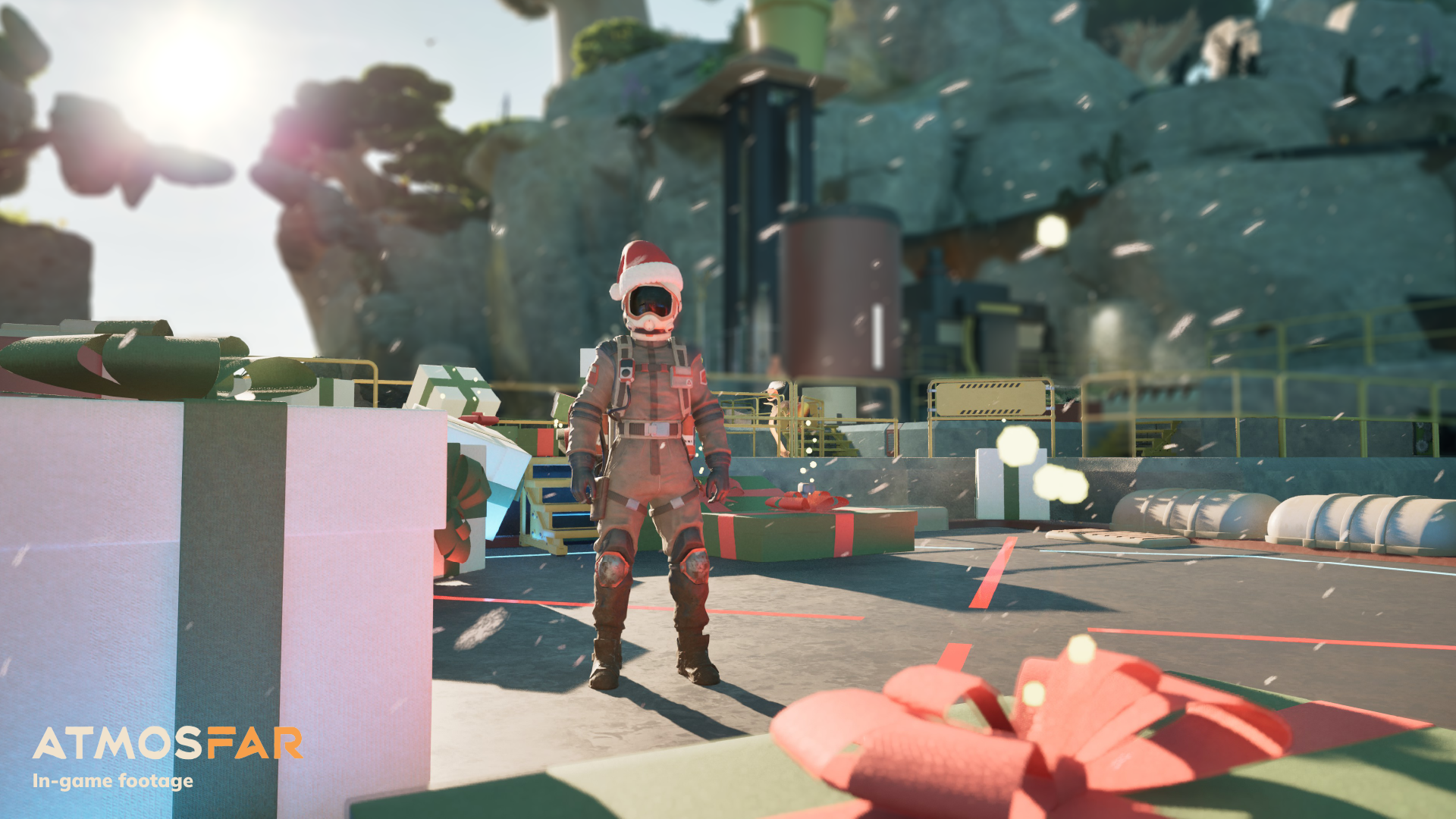
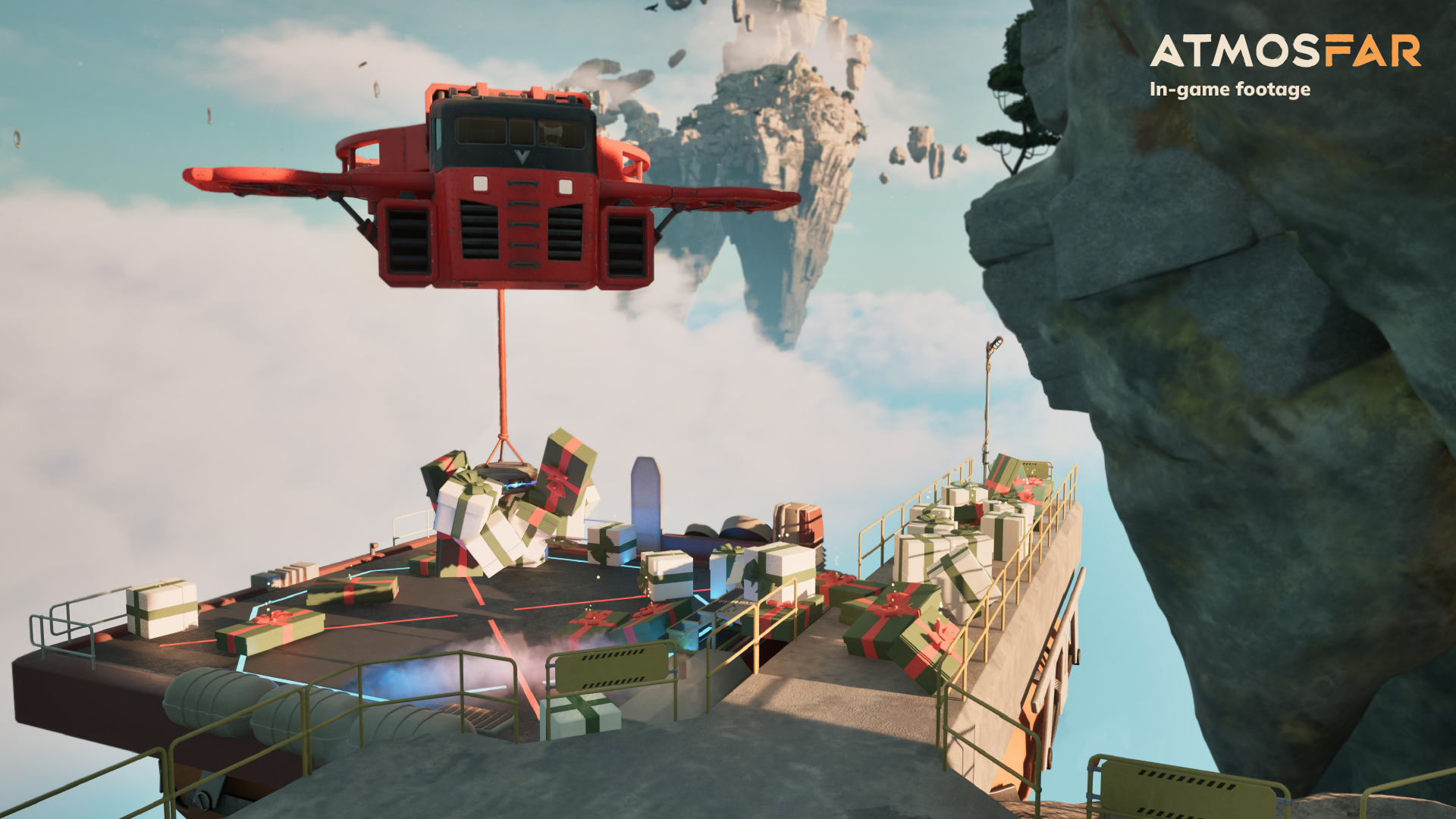
The first snow has fallen here in Malmö, Sweden, and we are curling up at the studio in front of our ever-shining screens. As the Holidays are approaching, we’re trying our hardest to squeeze out as much progress as possible on development before we take some well-deserved time off.
Would you rather watch the dev vlog? Check it out here!
As we’re starting to wrap up 2025, we’re taking some time to reflect on what we’ve achieved this year and how far we’ve come. Around this time a year ago, we were in the middle of blocking out and shaping the major islands for each region of the game. This meant that no vegetation or buildings were to be found in the game yet. The player character still had its former appearance as seen in the pictures below, and most core gameplay systems were still in their infancy. December also marks the one year anniversary of one of our main key art images. How has it already been a year?!
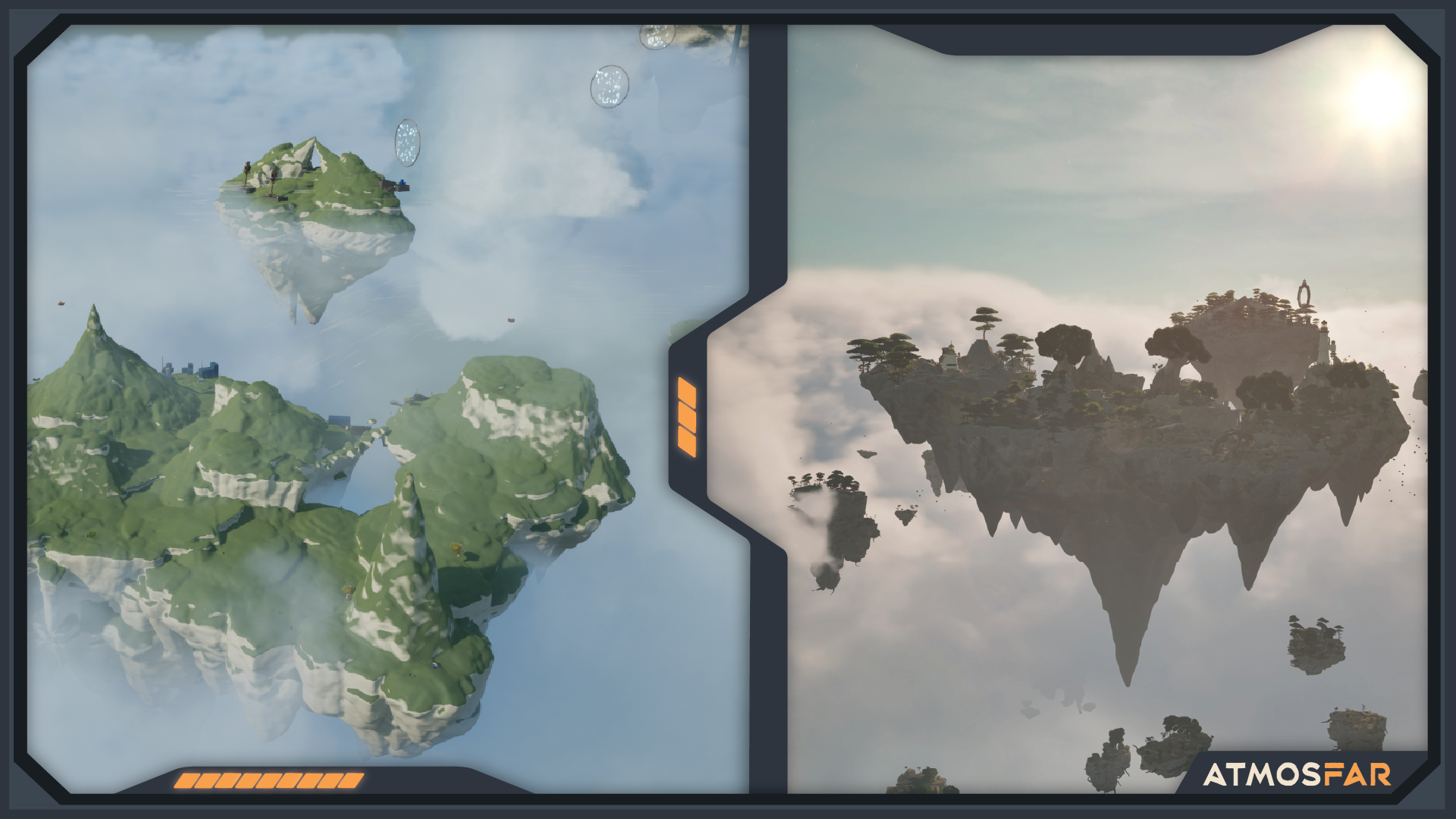
It’s actually almost easier to let these images speak for themselves rather than to blabber on about what we’ve been working on this year, as these blog posts are long enough as it is already. But what we really want to highlight is that when working at a high pace, it is sometimes easy to miss the progress that has been made over the years if you don’t take a step back and look at the big picture.
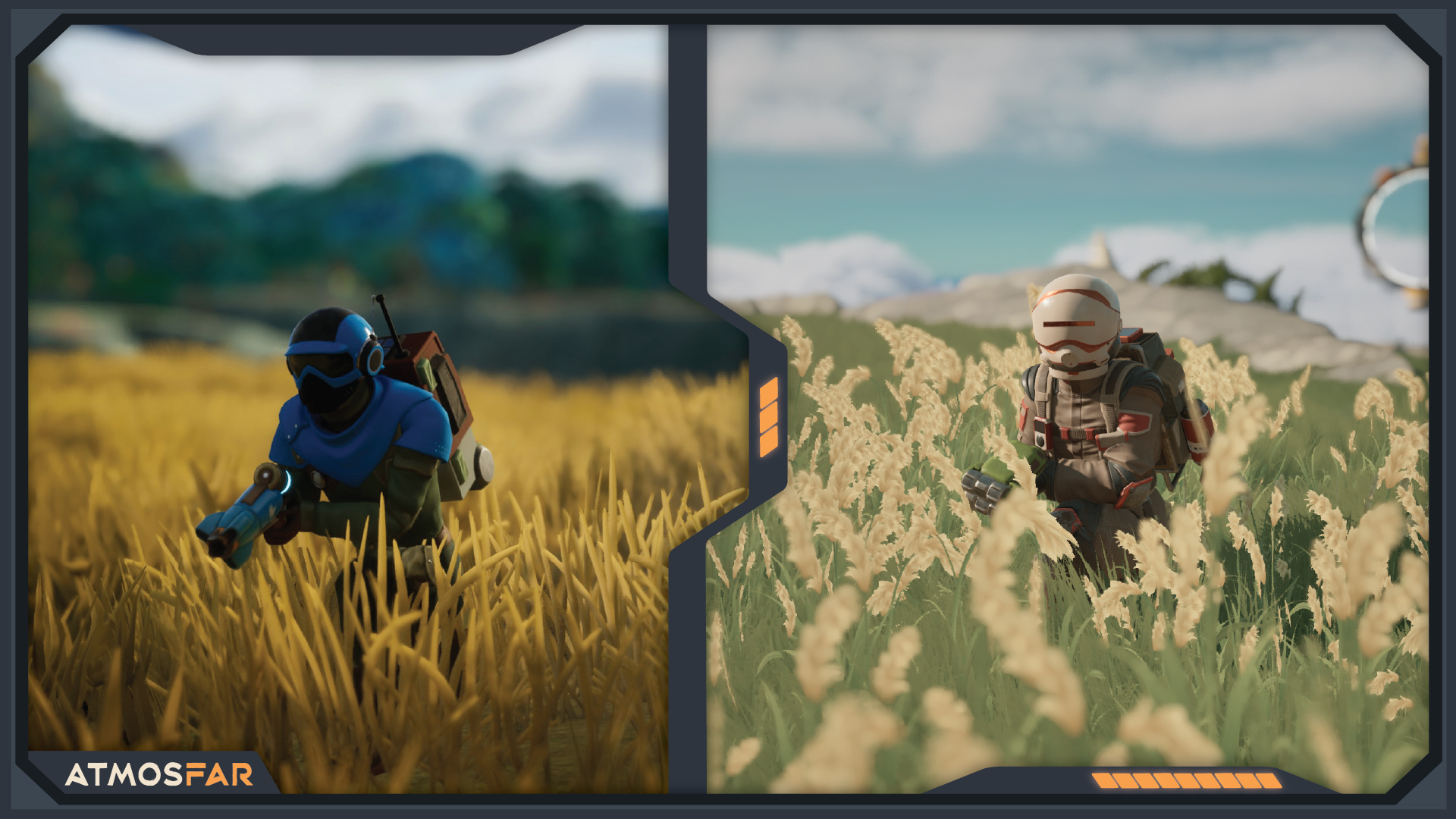
Looking back, we’re both very impressed and proud of our team and the level of quality that everyone has managed to produce at the studio. For each day, ATMOSFAR is getting closer and closer our vision, and we can’t wait to share it with you!
But, this dev blog is not supposed to be about everything that we’ve done in 2025, especially since you already know most of it! This blog is supposed to cover what you don’t know about it yet, which is the things we’ve been working on the last two months. So, with regards to that, let’s go!
Yes, we know, we’re always talking about those damn islands! And you’re probably thinking, “gosh, how much work can one island be?!”. As it turns out, quite a lot! Creating a fully immersive island includes everything from placing the right rocks in the right combination, to deciding which flowers should grow on which hills and how dense they should be. And not only that! In order to get the rocks and sedimentary layers looking the way we want them to, a lot of fiddling with different textures and shaders is required. Which is in fact one of the things we’ve focused on since our last dev blog.
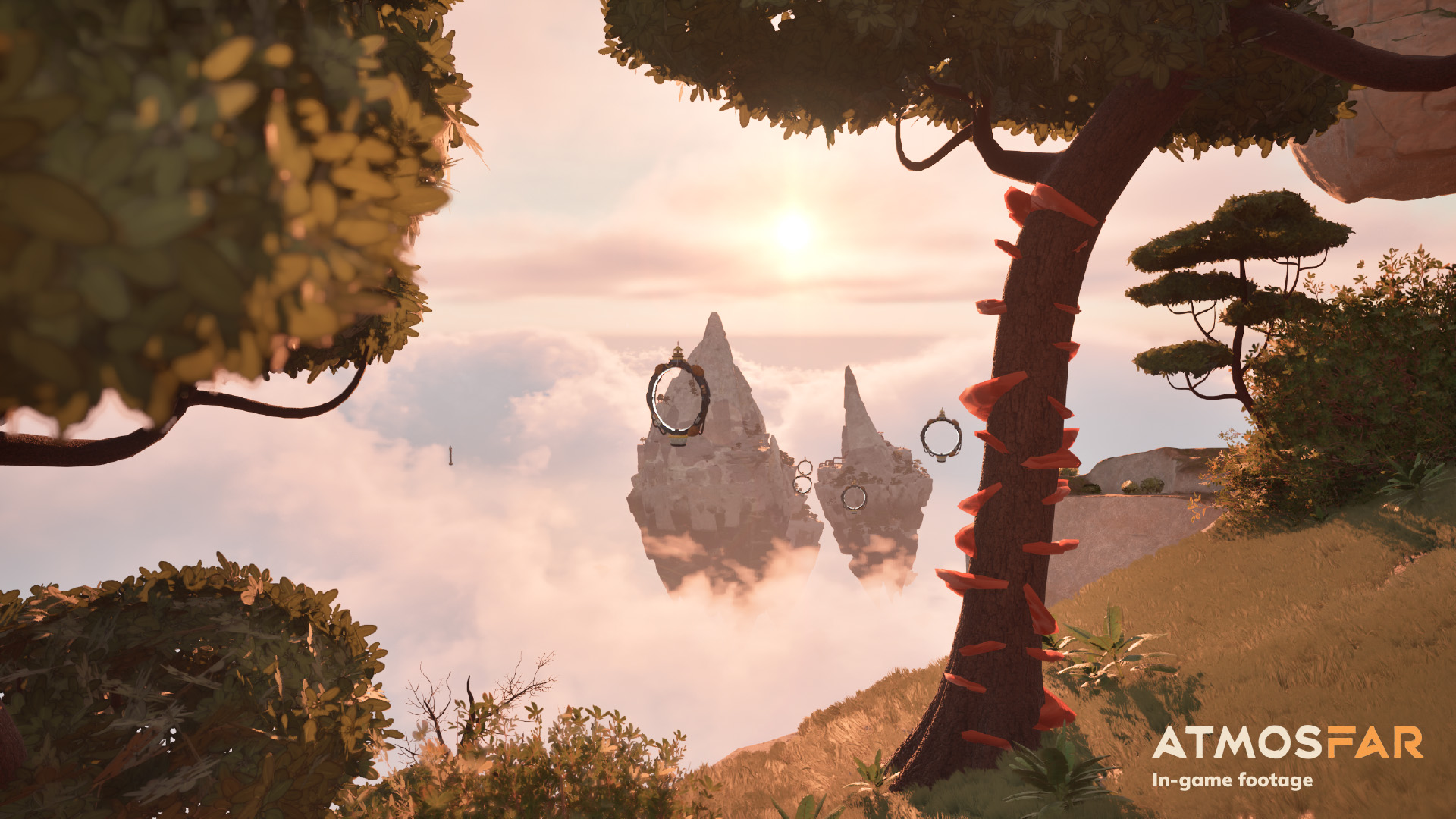
This task has taken us on a deep dive through different colors and textures for multiple islands in different regions, as we feel that it’s important that each distinct region get its own visual identity. Different color schemes have been developed, together with multiple texture and shader iterations to really nail the look of different types of rock. Alongside this, we’ve also focused on height based blending, to ensure smooth transitions between different types of materials.
To really enhance the the feeling and appearance of the different regions, we’ve also turned our attention to the lightning settings of the game. Here we’ve been experimenting (and still are) with different light and color settings for each region. The thought behind this is that each region and its corresponding islands should have their own, unique visual appearance, not only through vegetation and physical assets, but also through the colors itself. When designing the schemes for the region, we’ve tried to take the altitude into consideration, meaning that the stars for example, are more visible the further up you are. This also means that dawn, noon, sunset and night will differ slightly depending on where you are on Tycos. Check out some of the first iterations below. Pretty cool, right? Once we wrap up the schemes for the major regions, we can continue with atmospheric designs for some of the sub biomes as well.
But, it is not only atmospheric abstracts that we’ve been working on. We have indeed also been working on a lot of physical aspects as well. Across the development journey of ATMOSFAR one of the most daunting task has been the development of the islands. They are not only complex from a game and level design perspective, but also huge pieces of land mass that require loads of terrain and vegetation assets to look great while also being technically complex to put together in-engine and render efficiently. The island creation pipeline has required a lot of work to get right, and while islands today are fully handcrafted endeavors assisted by a very efficient pipeline, we’re constantly exploring different ways of speeding up the development process.
It’s often been asked from the community to what extent our world is procedurally generated and while previously the answer would have been nothing, today we’ve come far enough with the development of ATMOSFAR to identify a few key areas where procedural generation have perfect use cases. When developing a pipeline for creating an environment in a game you either spend lots of time developing a procedural system that can do this quickly, or you put that time towards a handcrafted pipeline where the majority of the time is spent working on the environment by hand.
When it comes to procedural generation, one of the core challenges is ensuring that objects are scattered with some type of intent. Especially when it comes to level design, intent is very important as that is what can make or break player navigation. When you’re creating an island by hand, intent is naturally part of the developer’s design process while with a procedural approach, intent needs to be part of the scattering rule set which is often very difficult. For ATMOSFAR, we’ve found that handcrafting the islands yields the most favorable result when looking at the full picture, but we’ve always been open to supporting that pipeline with procedural tools if a suitable usecase has presented itself.
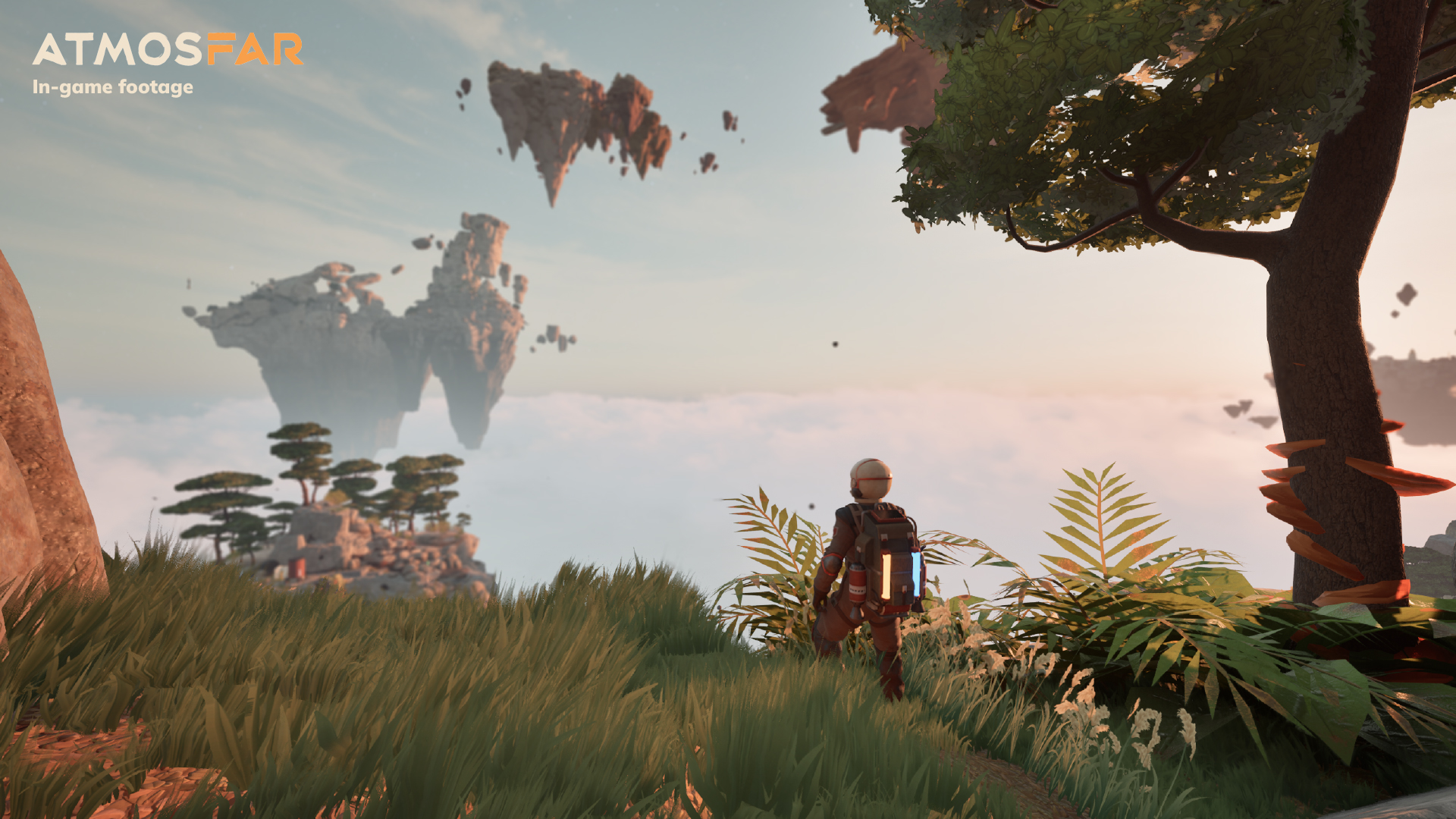
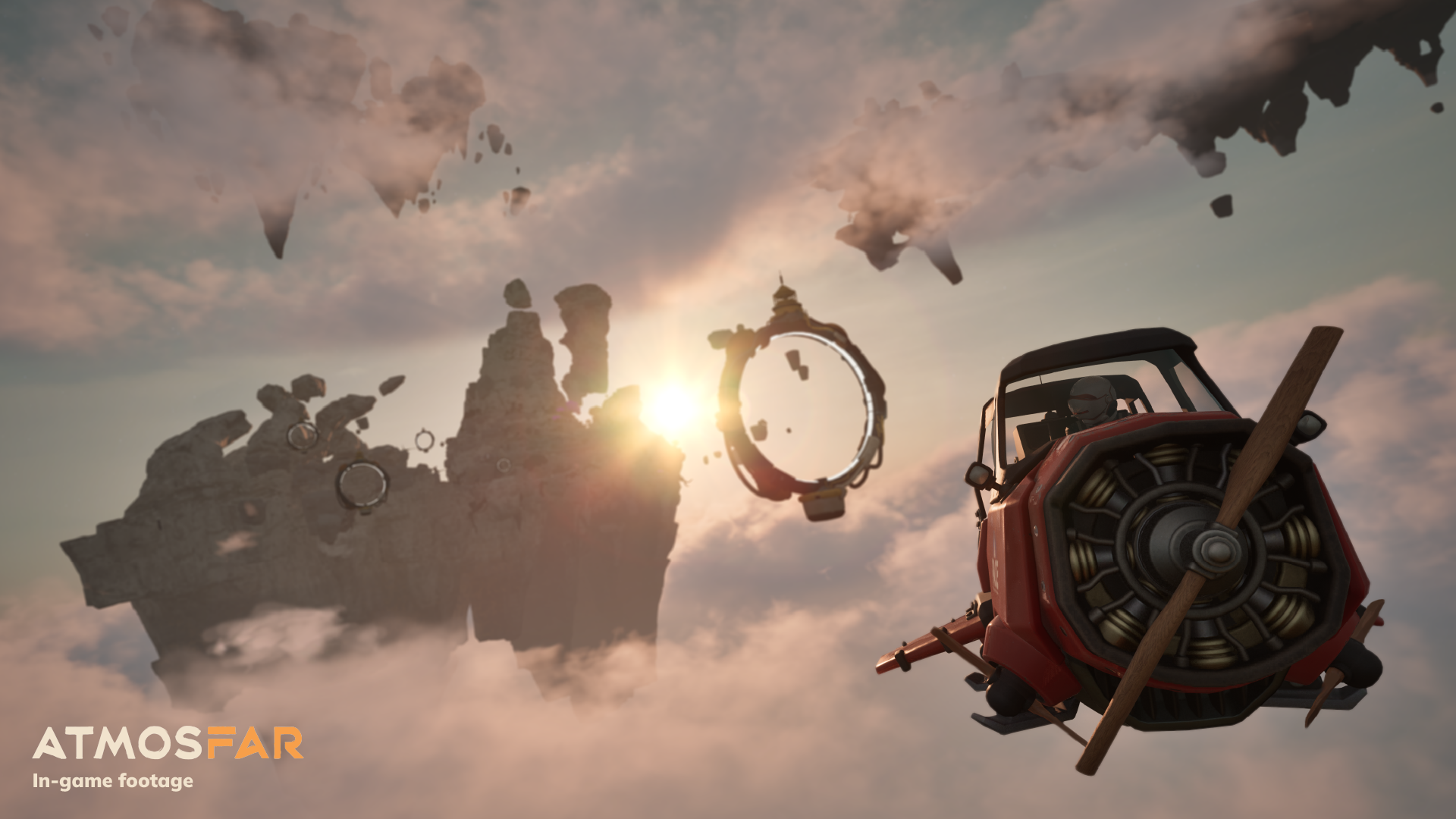
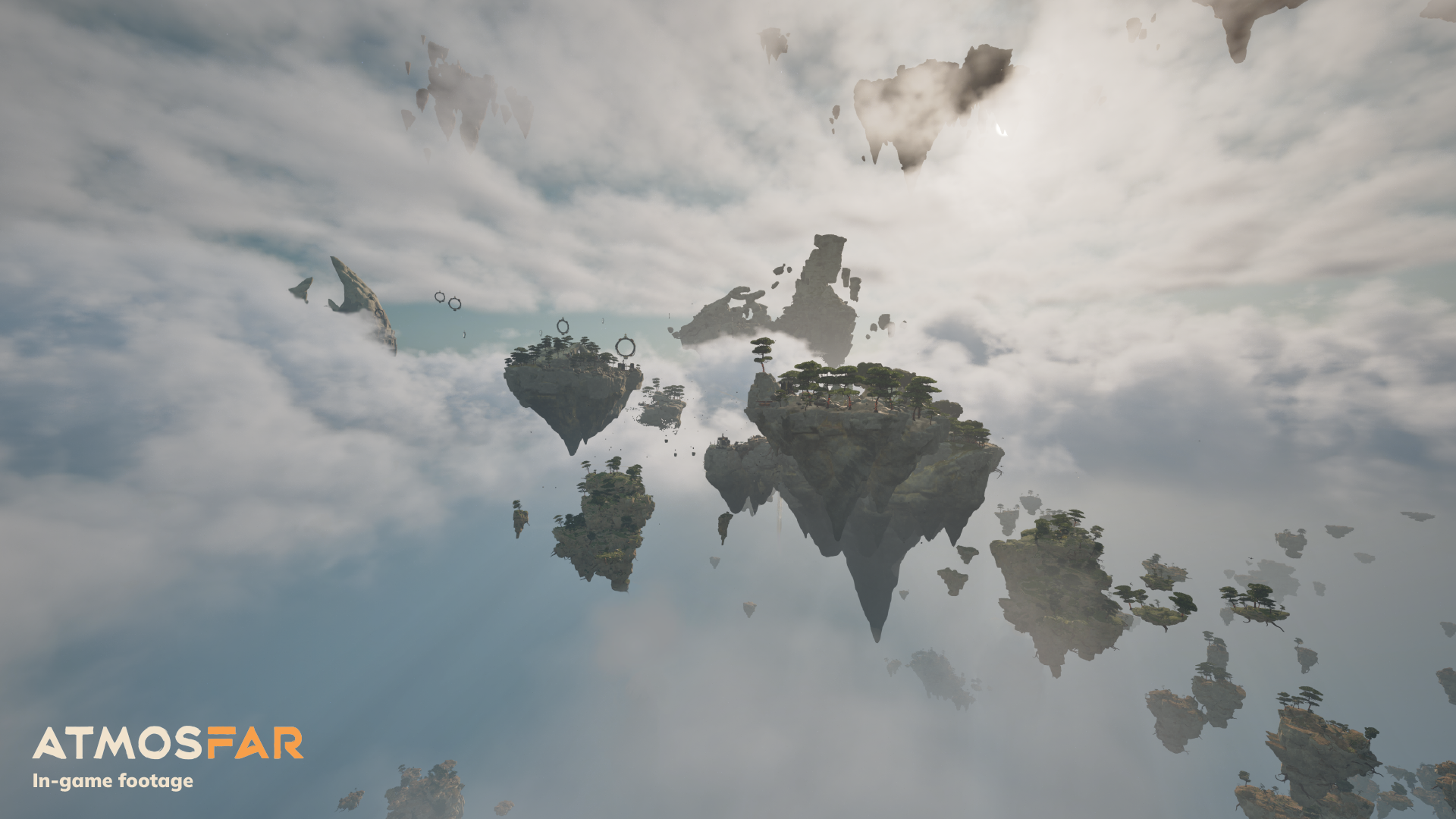
As per the latest week of development, such a use case has now been identified and we’ve thus introduced a concept we call islets. An islet is a very small island, more of an island fragment, and is in contrast to our large islands fully procedurally generated. They use pretty much the same assets as the regular islands but are a fraction of the size which removes potential issues with player navigation and thus the need for navigational intent. You’ll encounter islets scattered across the world, they’ll be seen floating in the open air between islands, or around island silhouettes, and are perfect locations for throwing up a quick camp at or scavenging for additional resources.
Some islets may have valuable items on them, or dangerous plantimals, but most likely no buildings or animals. Our islets are generated using Unreal Engine’s PCG system and we’ve built quite a few tools for easing their scattering across the world, including cluster, area and spline spawners. This is just one of the systems we’ll continue to develop until release and throughout early access but it’s already show some great promise on how to efficiently compliment the level design of ATMOSFAR while also drastically adding to the fantasy of our vistas. Here is an early example of how porcedurally generated islets can complement the bigger islands:
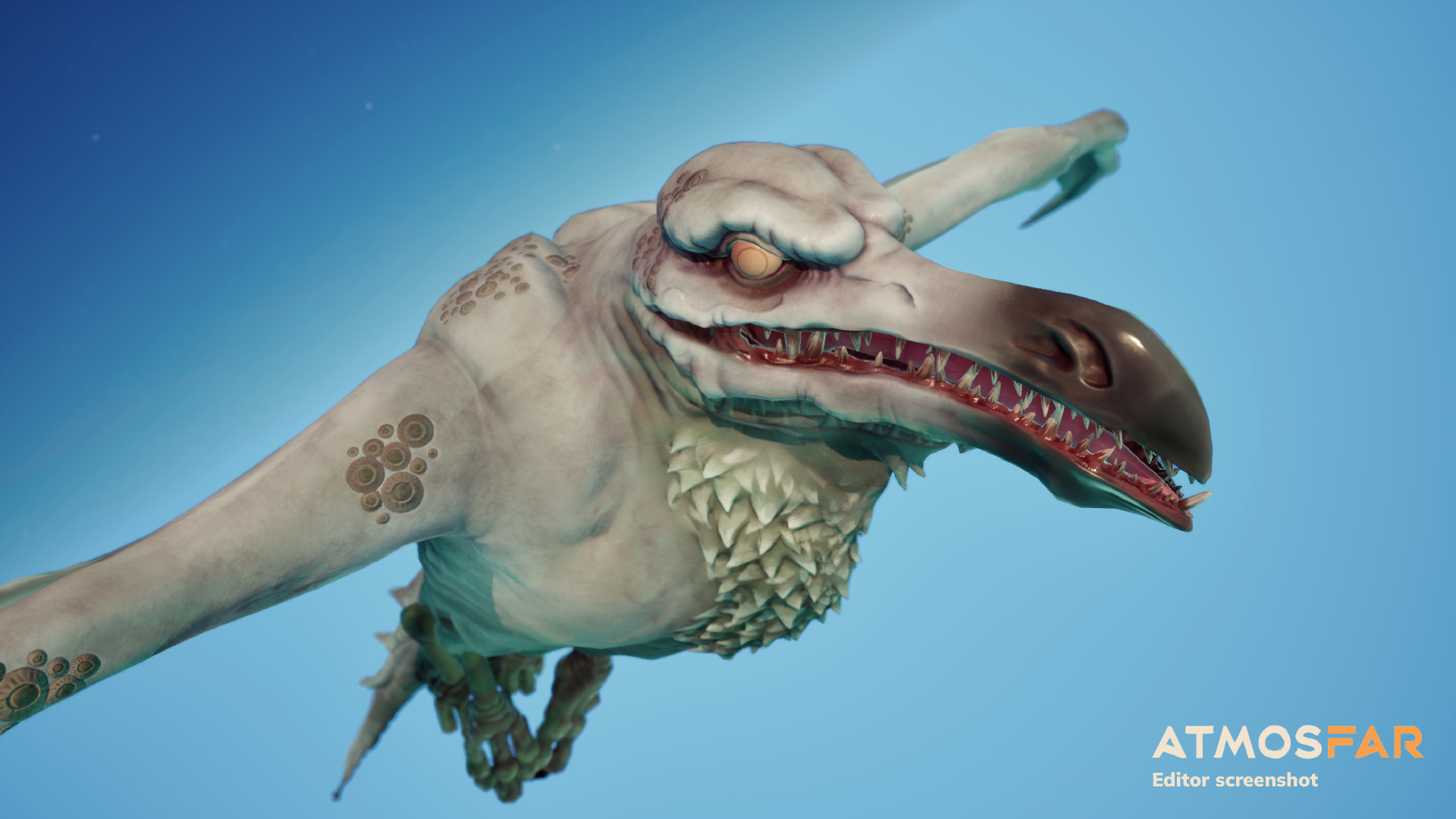
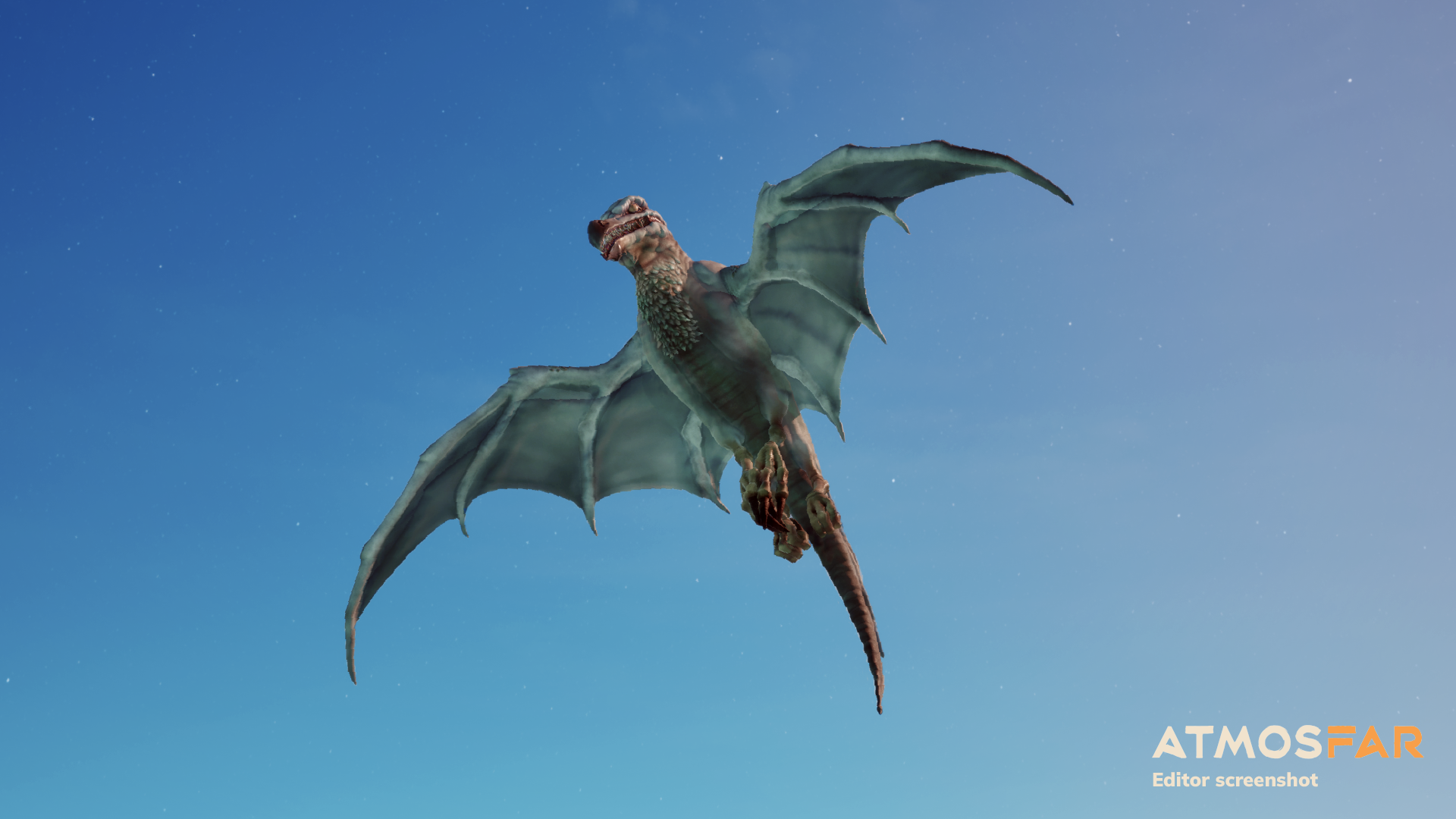
As the title indicates, we’re happy to reintroduce you to an old “friend” you might have met before. First introduced in May, during the last months, the Screecher, formerly known as Batgull, has now gotten its first animations and behavioral patterns in place. These creatures are extremely aggressive and hostile, and will pursue targets in air and on ground alike. As we’re working on their sound effects right now, we can’t show you their screeches yet. We can however confirm that they will both act and sound as terrifying as they look.
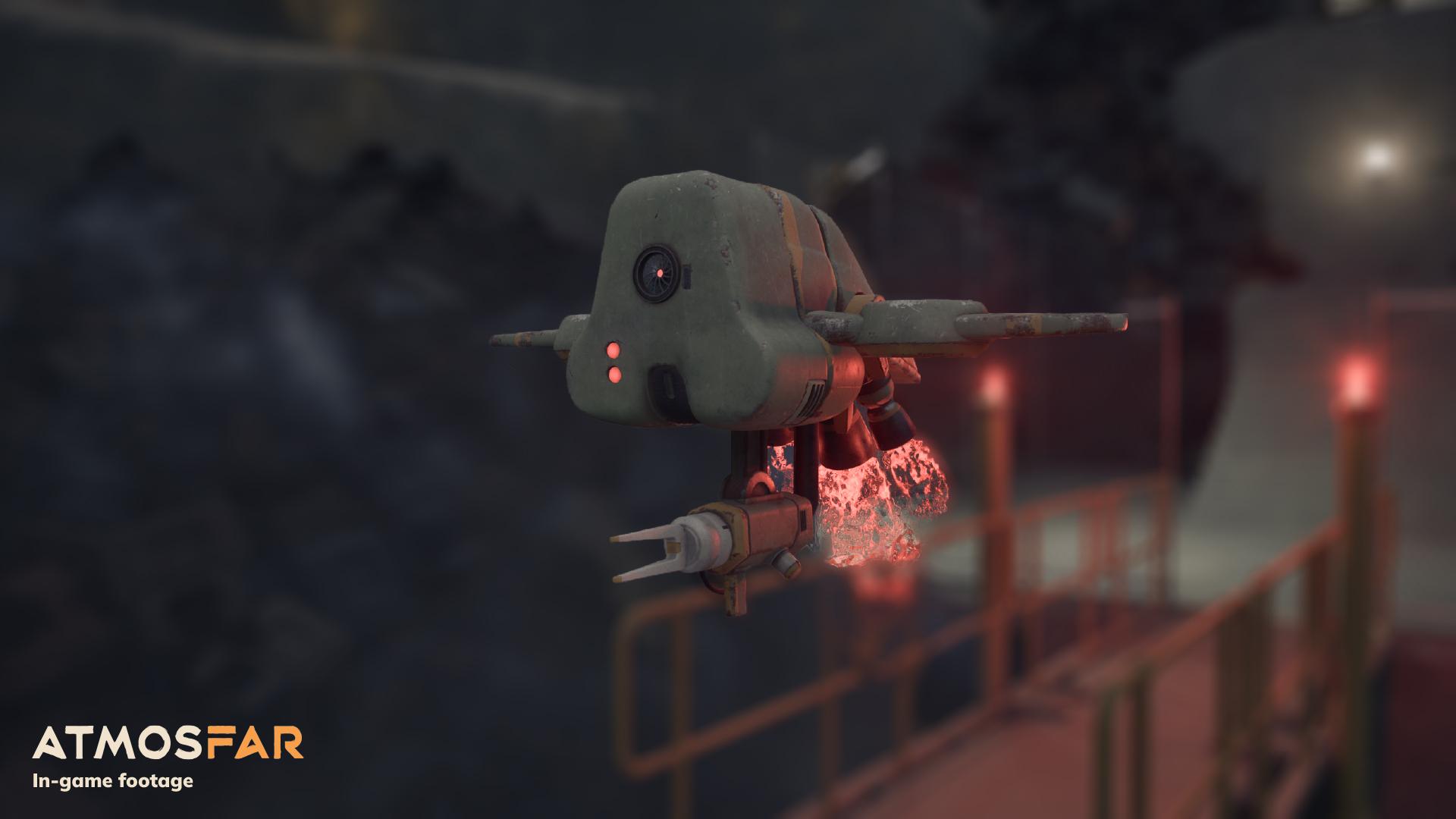
Another flying terror we’d like to reintroduce to you is the PACE guard drone. Last time you saw it, it was “just” existing in the second dimension (as concept art, in other words). We’re delighted and terrified to share that this menace now can be found on Tycos. Developed by PACE shortly after their arrival at planet Tycos, these drones were designed to protect the humans from the alien dangers that Tycos housed.
As the number of humans grew on Tycos, food did not. PACE struggled to produce and harvest resources in the same rate as they were consumed, and as a product of this, leadership demanded more control and discipline to better balance resource management. PACE continued to awaken more people orbiting the planet from cryosleep in the hopes of increasing production on the planet. This failed. The already vast resources were to be distributed between even more people, yielding less for each individual. This naturally caused frictions in between the different factions of Tycos, which resulted in leadership tightening their grip even more, both through politics, and through military force.
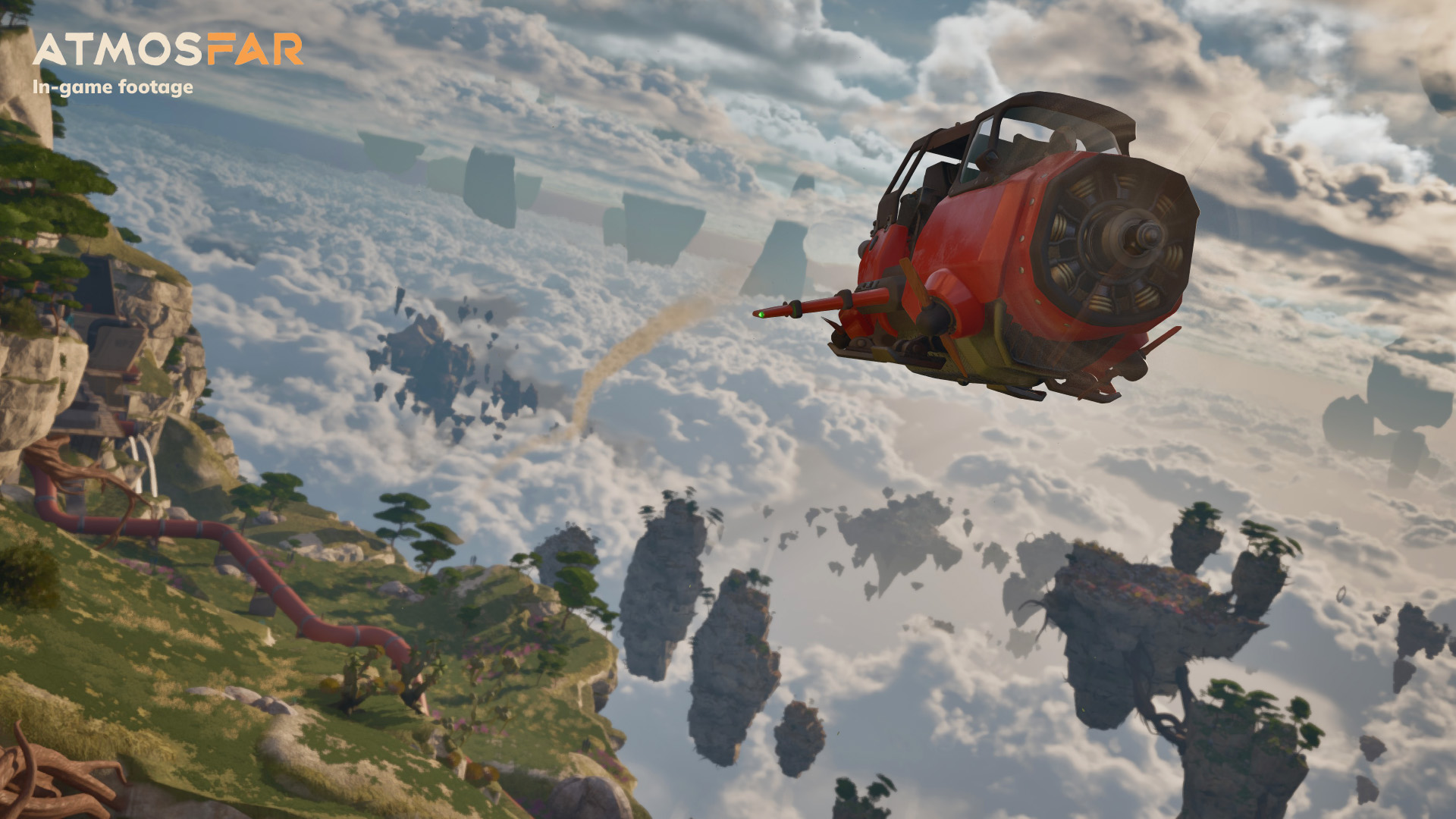
The guard drones were part of this military force, and the leadership saw this as an opportunity to utilize brute force without having to having to keep real humans in their care. The guard drones were thus stationed in different places around Tycos to patrol and defend various strongholds. As PACE collapsed, these drones were left unattended without anyone to shut them off or manage their behavior. Because of this, many places of Tycos are still guarded by these drones, carrying out forgotten orders in a world that left them behind.
Don’t worry, Tycos is not only home to terrible flying monstrosities. Two new… beasts? Animals? Creatures? Have also recently been spotted on some of the floating islands. Here at the studio, we’re creatively calling them the Smallivore and the Largivore (rest assured, these are in fact just working names). We’ll give you a sneak peek of these two aliens, but we won’t go into too much details here. You’ll have to figure them out for yourself when you arrive on Tycos!
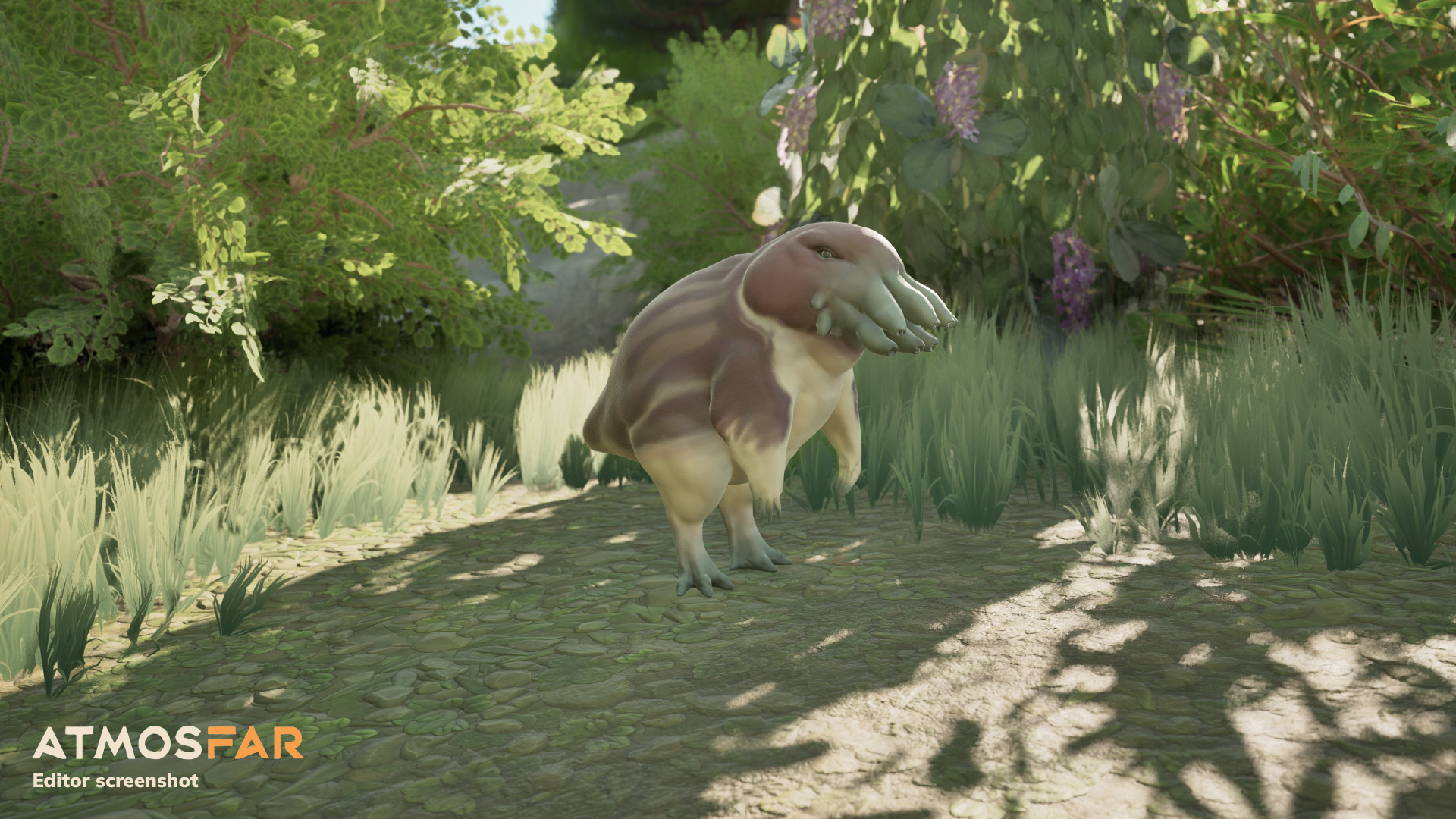
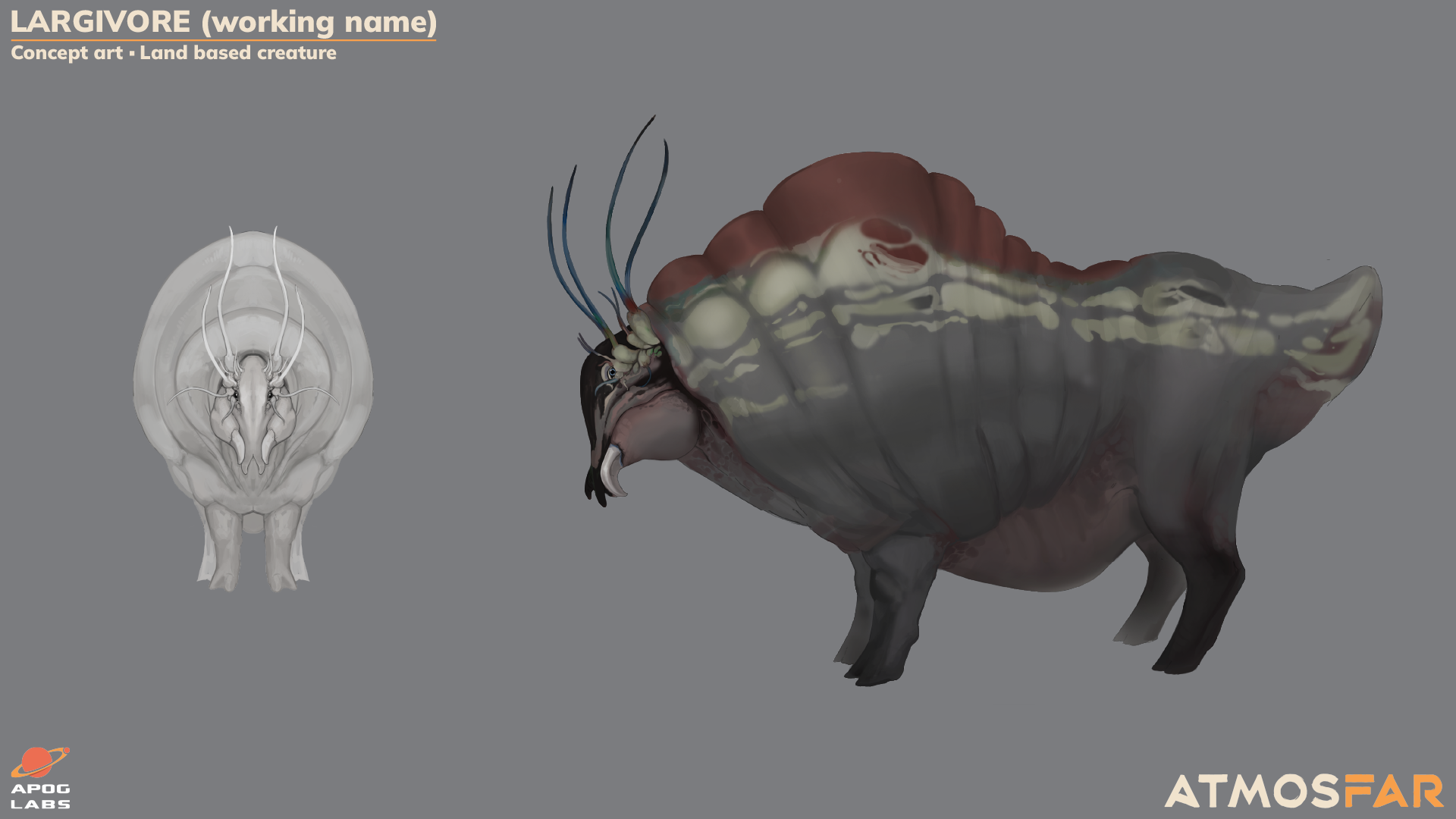
Woah, that’s also a lot of working names in one single text! Are they never going to give proper names to anything in this game?! Well yes, we are. Or rather, we’re doing it as we speak!
After the summer vacations, the naming group got together and started the astronomical task of naming almost everything in the game. So far, names have been decided for islands, biomes, (some) points of interest, animals and some of the many plantimals that we have. In fact, we have so many things to name that we asked our community for some help, and they didn’t disappoint! A big disclaimer here is of course that almost all names we’ve used in our former dev blogs were working names.
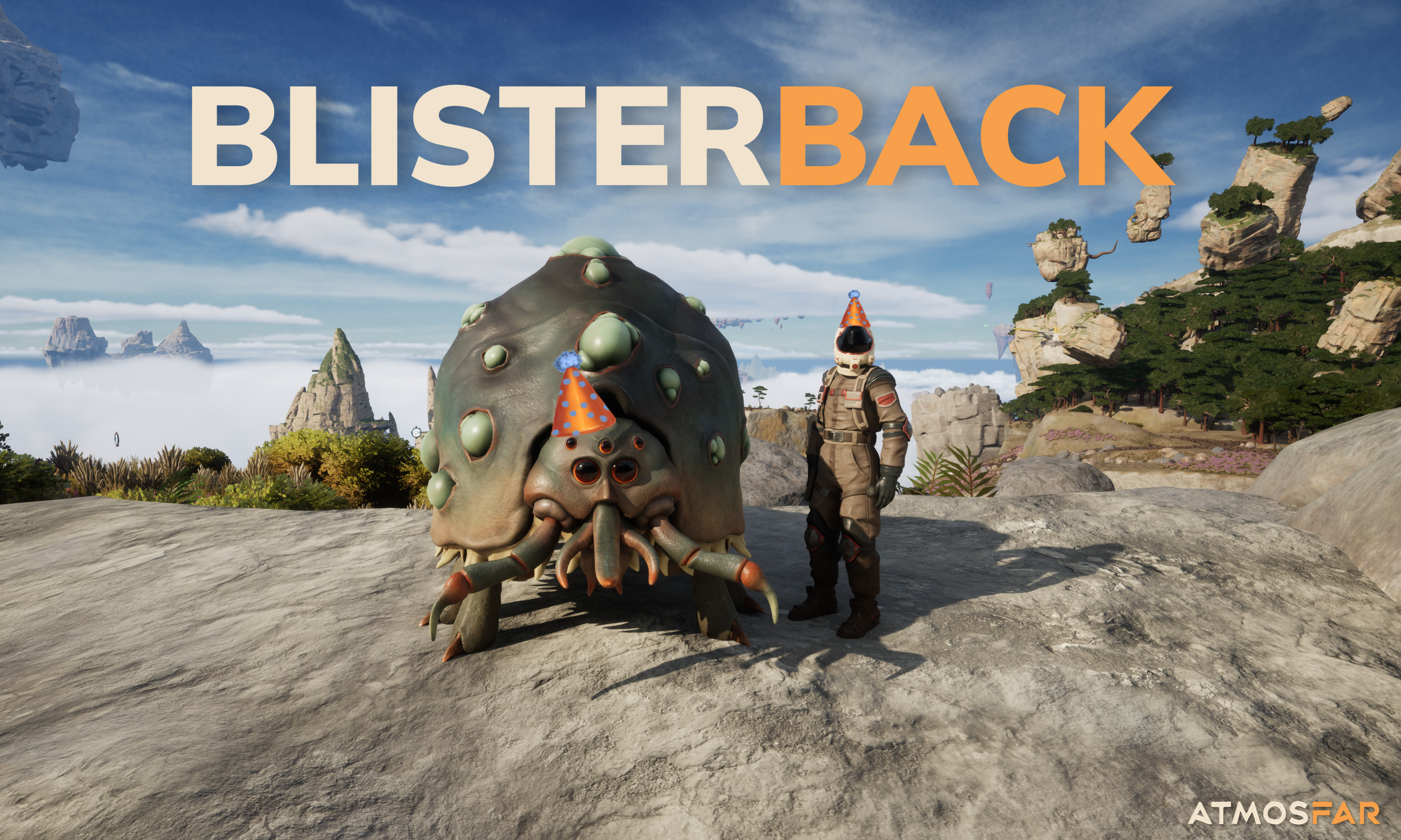
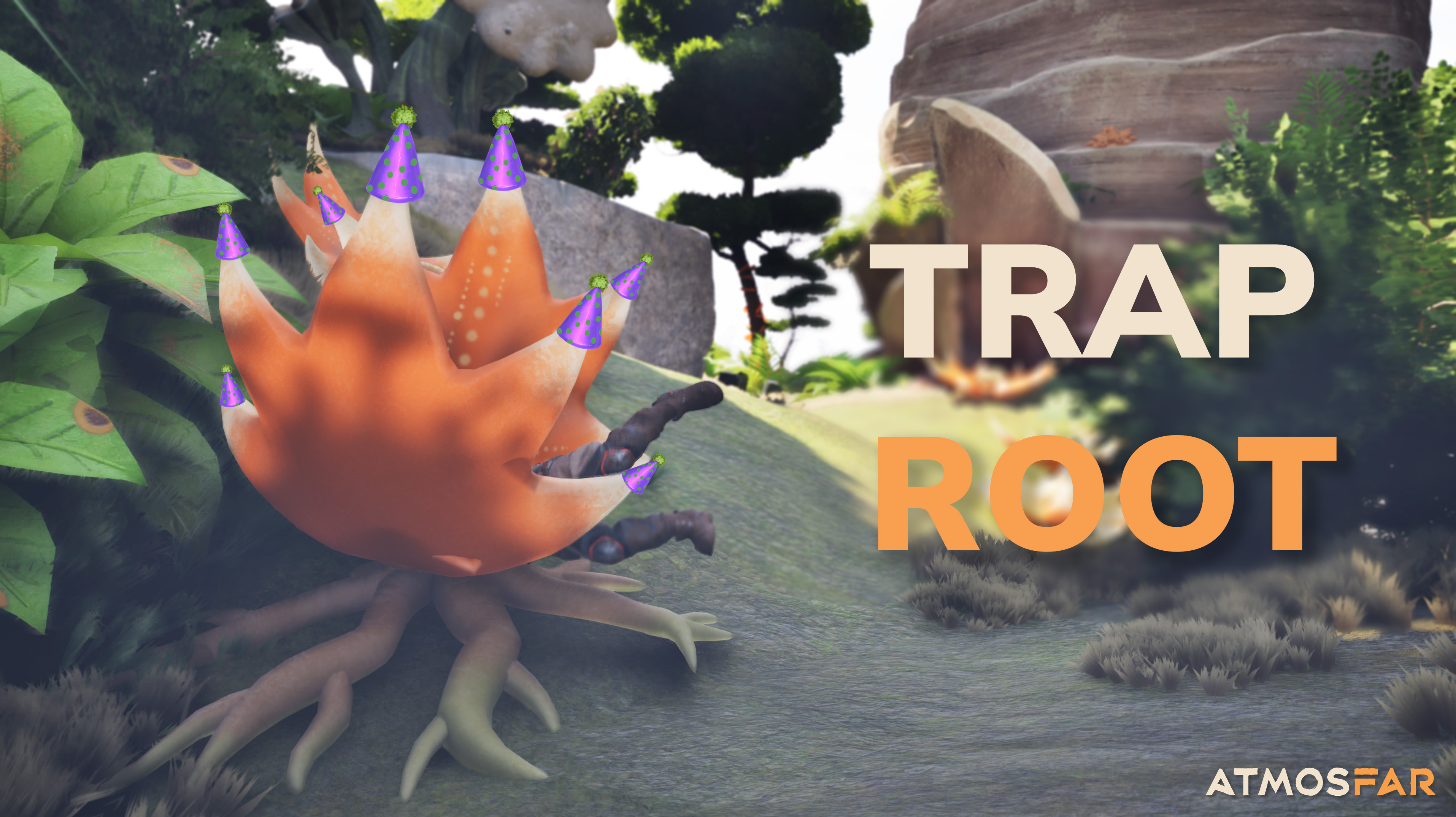
So far, the talented ATMOSFAR community has come up with two names that will be used in the game: They’ve changed the former Bombardier to the much better suiting Blisterback. They’ve also come up with the name Traproot, that will replace the former working name Venus Flytrap.
Do you want to be a part of ATMOSFAR’s development, come up with suggestions and ideas, and have the ability to vote in between which option that makes it into the game? Join our Discord server!
As most of the major gameplay mechanics are in place, we’ve turned our focus towards smaller, but equally important systems and mechanics.
Tycos is a rather big planet with multiple islands among its skies. Navigating these islands and their specific points of interest has sometimes proven to be quite the challenge. Due to this, we’ve now developed what we call the island notification system. This system lets you know which island you’re approaching, and sometimes also pings you if you’re approaching a biome or specific location that could be of interest to you.
As made quite evident by now, you won’t be the only person on Tycos. Rest assured that even if you decide to venture ATMOSFAR as a single player you will meet other Vagabonds, which is exactly why we’re in the midst of fleshing out the dialogue tree system. Being able to interact with NPCs by choosing which question to ask them, and which answers to give in return, is often taken for granted. Big or small system, it is nevertheless something that needs development in order to be featured in the game. Simple as that!
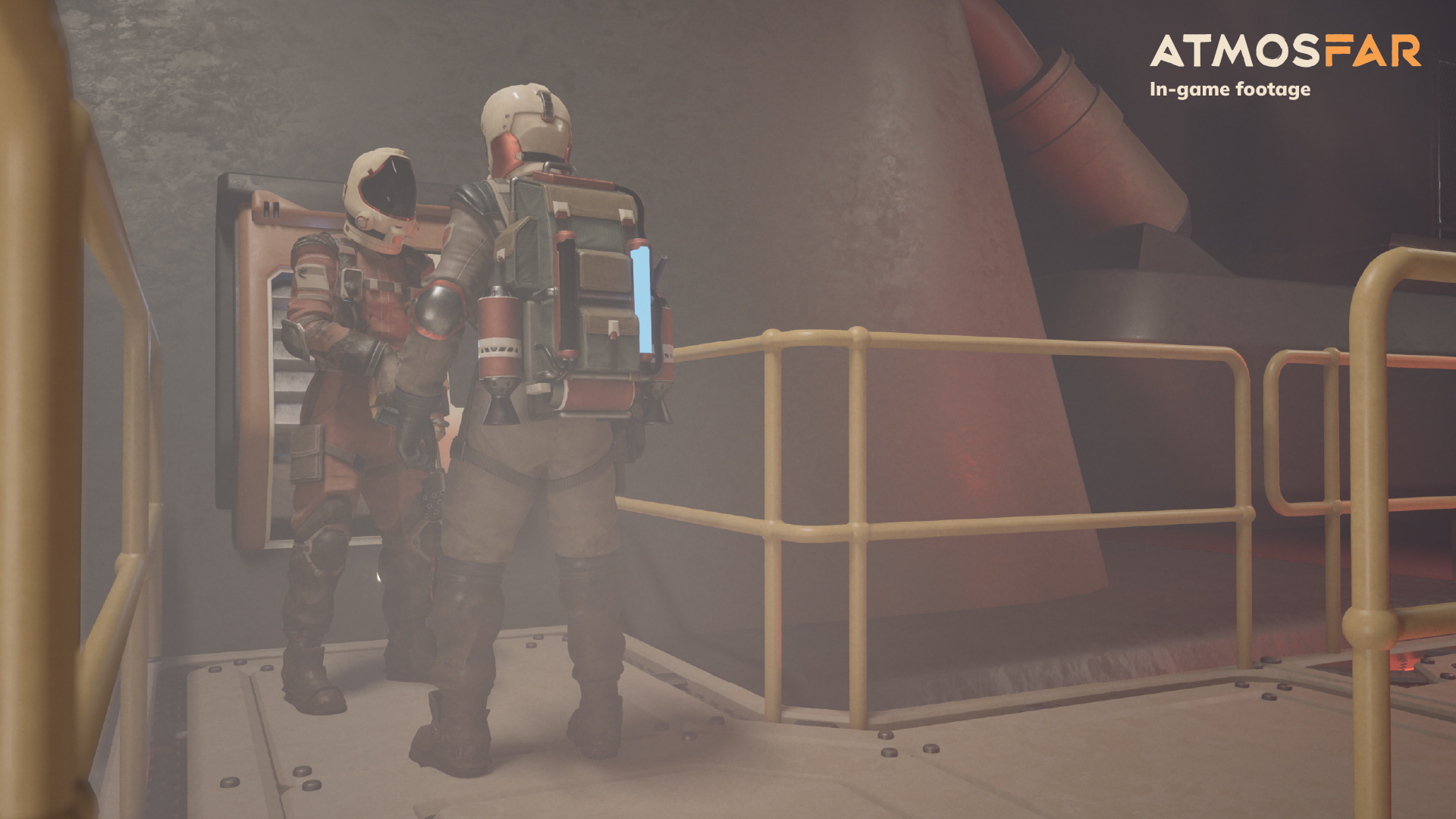
With the new animals, and even more plantimals and general vegetation, the biodiversity of Tycos is now bigger than ever.
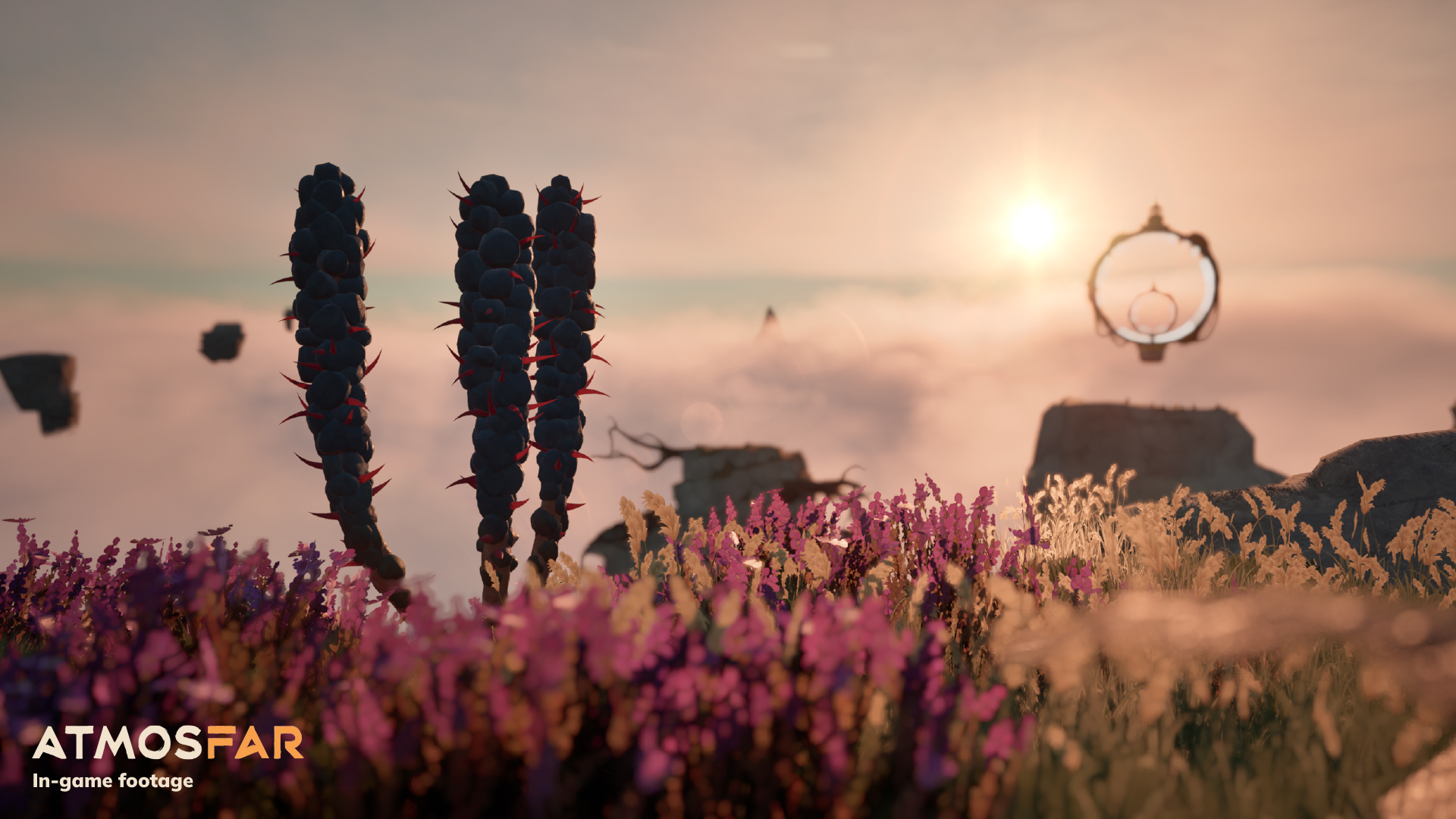
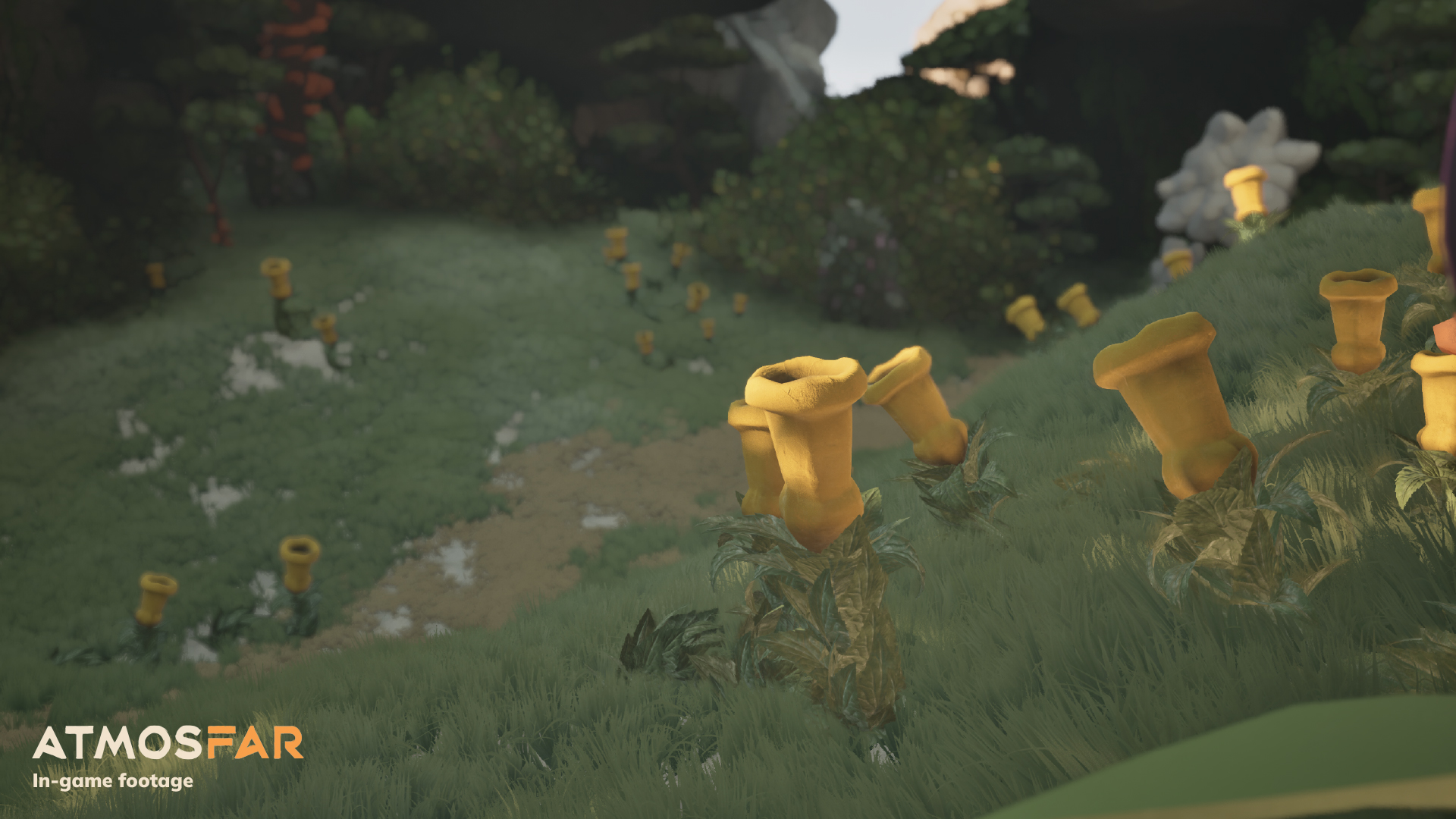
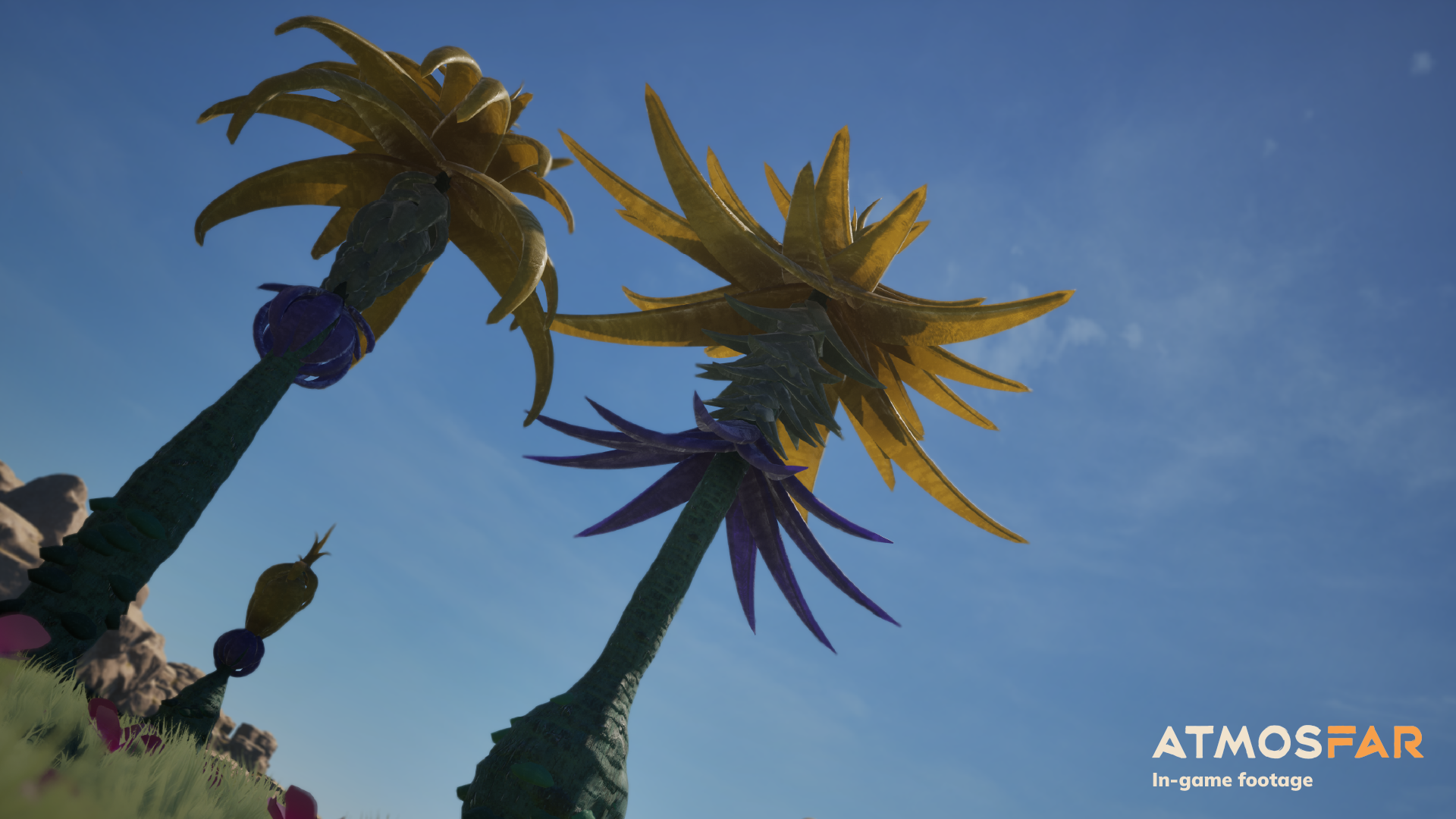
We know that we’ve been showing and describing quite a few plantimals to you before, and as to not bore you or spoil too much, we won’t go into too much details on the plantimals moving forward. We’ll show you some of the latest models, but we won’t explain their behavior or tell you their name. Until you set foot on Tycos, it’s up to your own imagination to fill in how these plantimals might operate and behave.
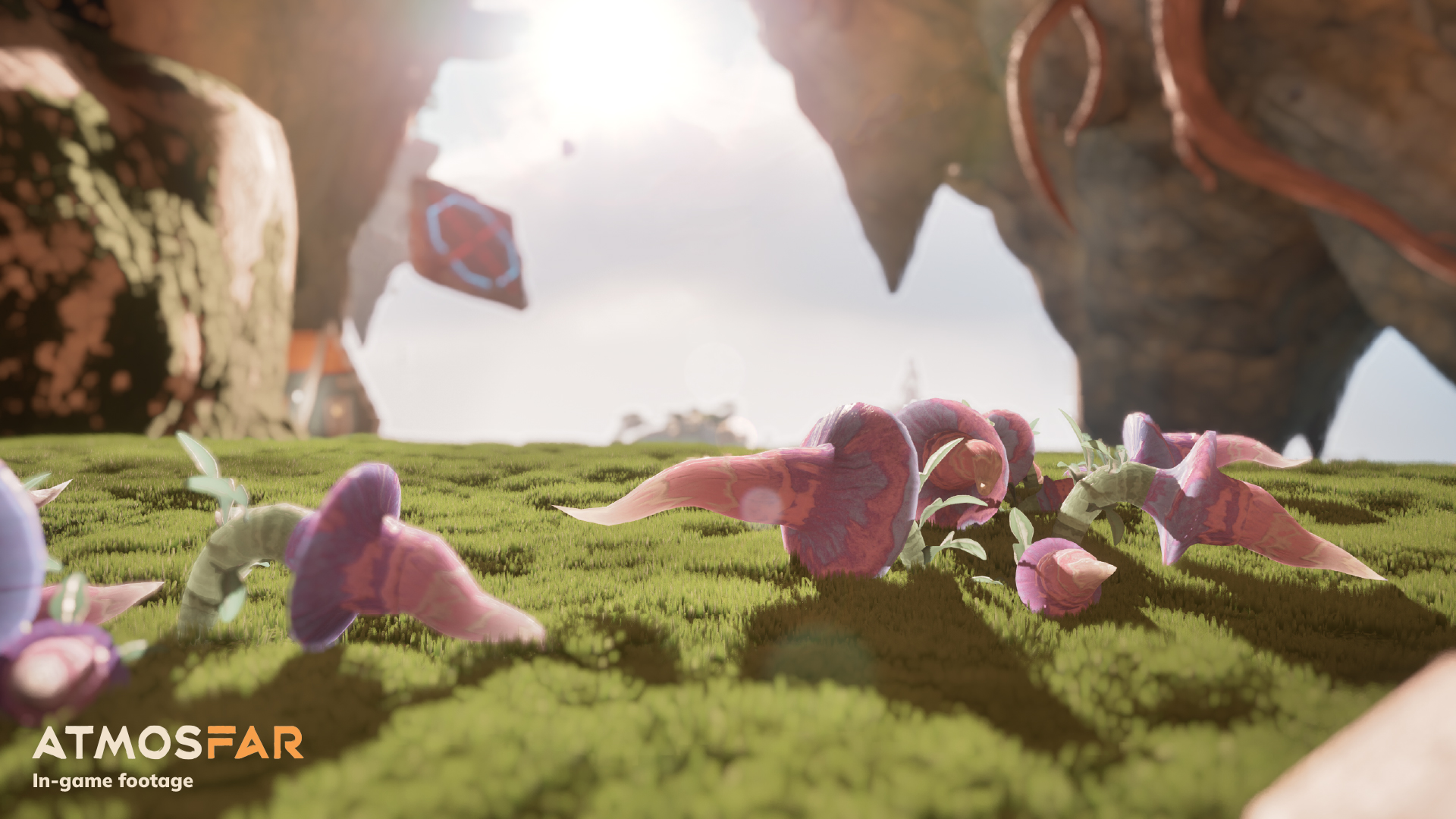
But believe it or not, plantimals are actually not the only type of vegetation that will be growing on Tycos. As we've started set-dressing some of the islands with our bigger vegetation assets, it is now time to start working on the smaller types of plants to add some color to the ground itself. This resulted in a few new types of plants, like a new form of… mushroom?
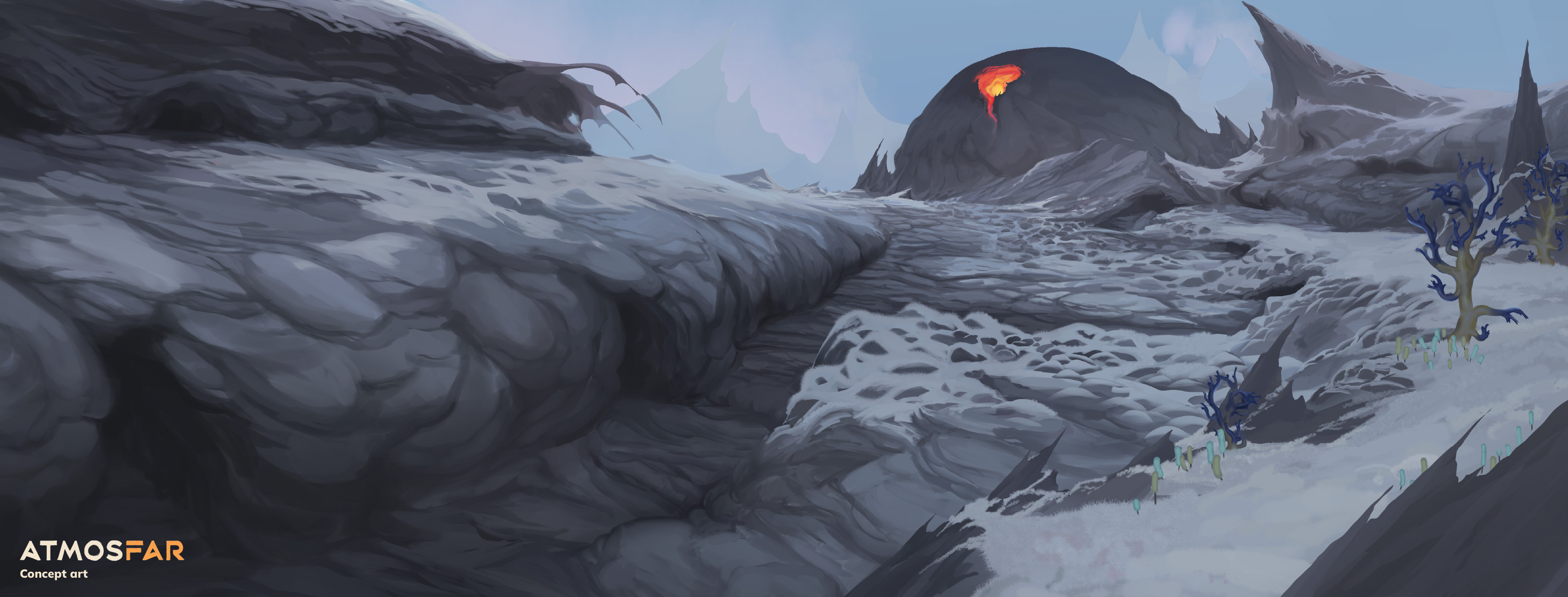
We’re also turning our gaze towards the higher parts of the skies. We won’t go into too much detail, but some new models have been created, and concept art has been drawn…
The last major thing we’ve been, and still are working on, is somewhat of a visual makeover for the massive Cloud Cruiser. While we were ecstatic to see that the in-game building and decoration system worked properly, we’ve now gone into the second part of the Cloud Cruiser’s development: Making it look even better!
The building, decorating and color system allowed for a bit too much detail, which resulted in the Cloud Cruiser looking both bulky and too noisy. What we’re working on now is thus simplifying some of the visual aspects to make it easier to simply… make them look good.
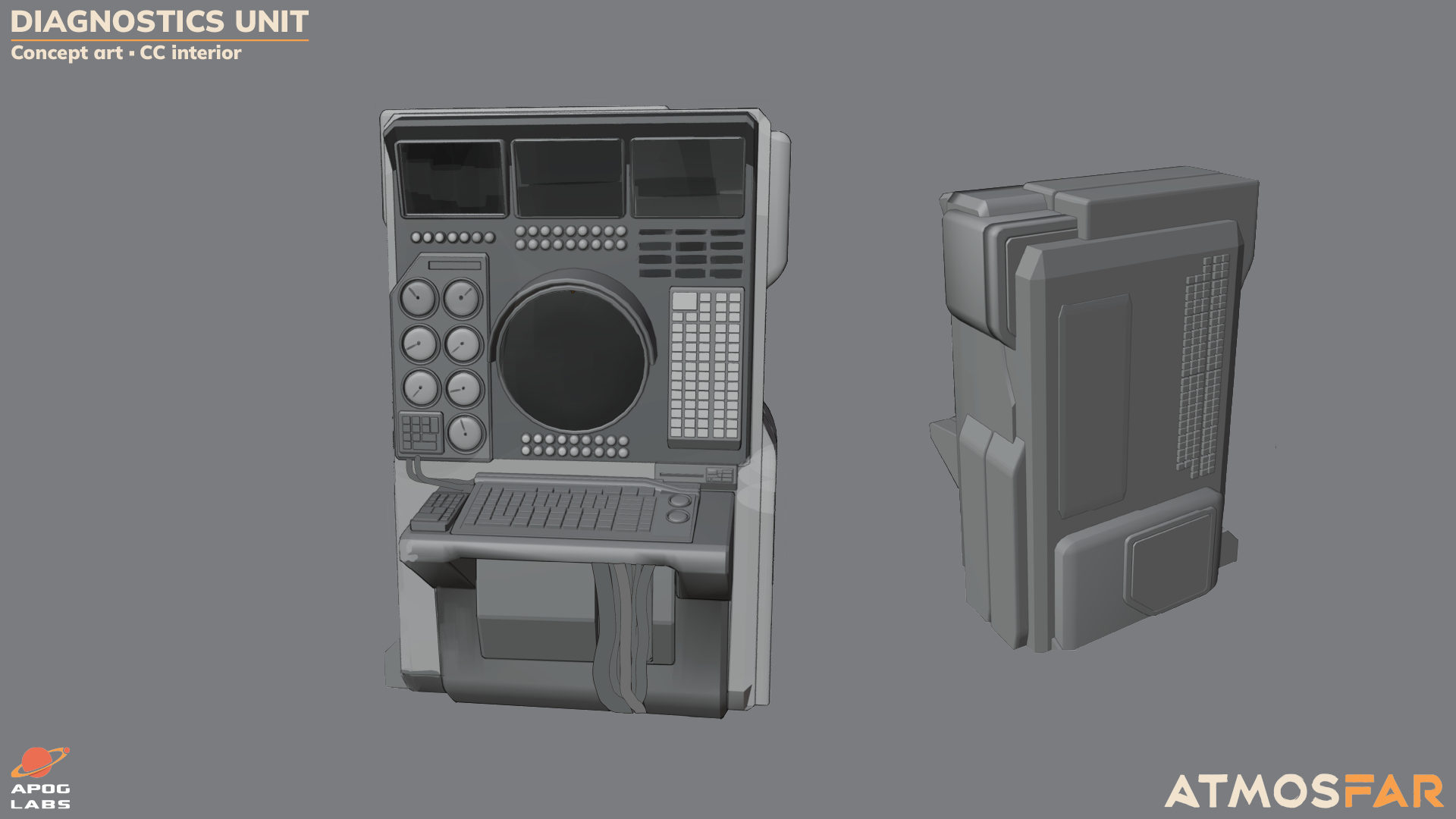
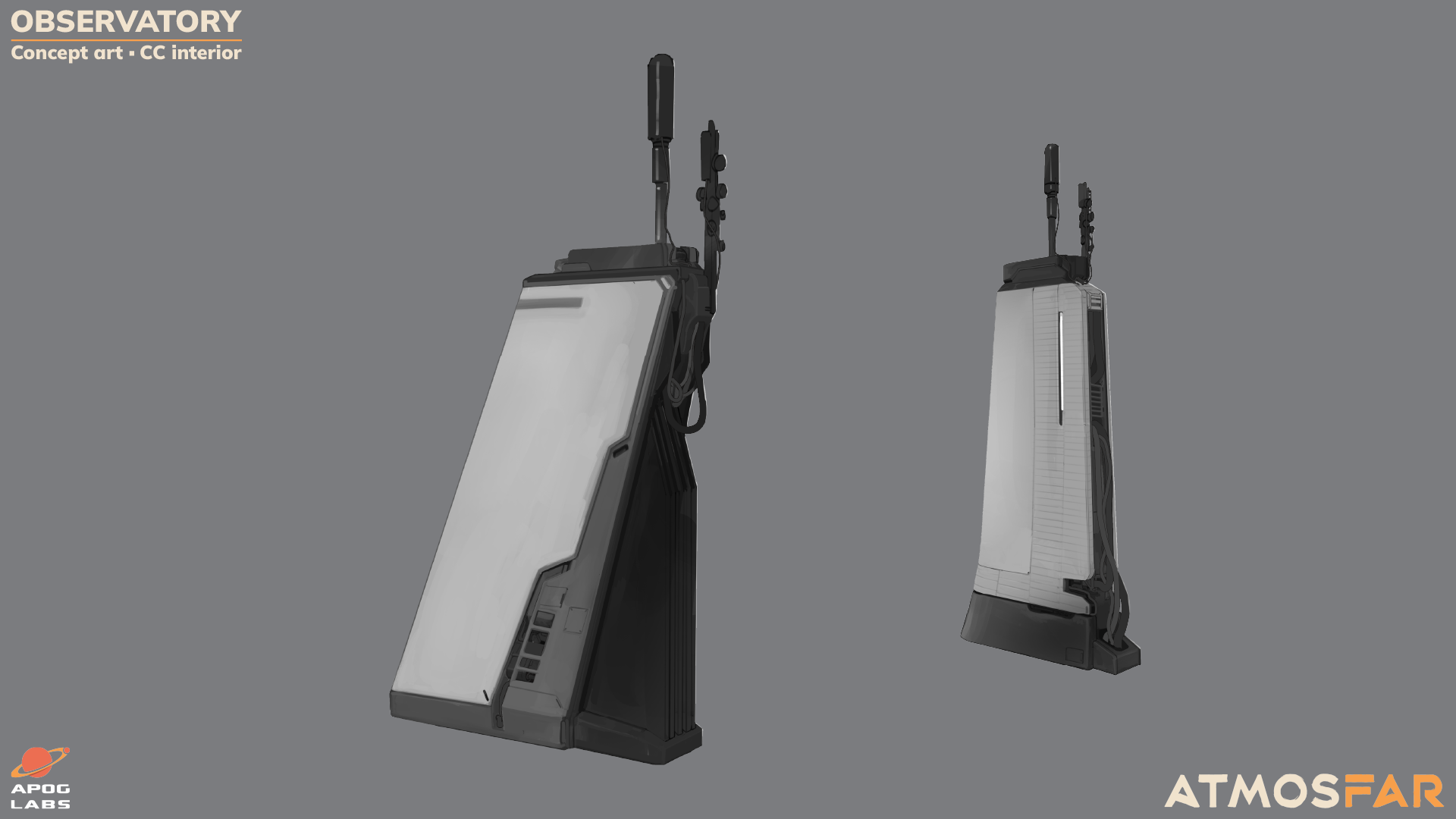
Alongside this, concept art for some central pieces have also been iterated, like the diagnostics unit and observatory, for example. We’re really looking forward to be able to reintroduce you to your home on Tycos!
As mentioned in the introduction to this dev blog, Christmas holidays are just around the corner, and everyone at the lab is to have a well deserved break. Up until Christmas, we will continue onto the next island of Tycos to populate it with vegetation, buildings and exciting gameplay moments.
As this is our last dev blog for the year, we want to thank you for spending 2025 with us. Next year, ATMOSFAR will release into Early Access and we can’t wait. We have so much planned for all of you!
So until then, Merry Christmas and Happy New Year. Don’t forget to make a wish! Ours will definitely be for a favorable 2026, with many players and few bugs!
See you on Tycos next year!
//Apog Labs