All in-game footage in this blog post comes from an EA beta build and may differ from the final game.
Greetings from the Audio Sector of Mission Control, pleased to make your acquaintance!
I’m Joe, the Audio Lead on ATMOSFAR. It is my job to build the audio vision of Planet Tycos with our wonderful audio team and the whole crew at Apog Labs. While I do spend lots of time creating, recording, synthesising and implementing sounds into our game, the biggest part of what I do is thinking up how and why the world of ATMOSFAR sounds how it does. This could be from the shifting of the player’s backpack to the blast of a Wasp booster, everything in the game has a purpose and vision that seeks to immerse our soon-to-be players into this exciting planet!
In this blog post I’d like to take you all on a little ‘sound safari’, giving you a small peek behind the curtain of what we think about when we create sound for a world such as Tycos, including the ambience, player sounds, and the life that resides on these isles.
Let’s buckle up…

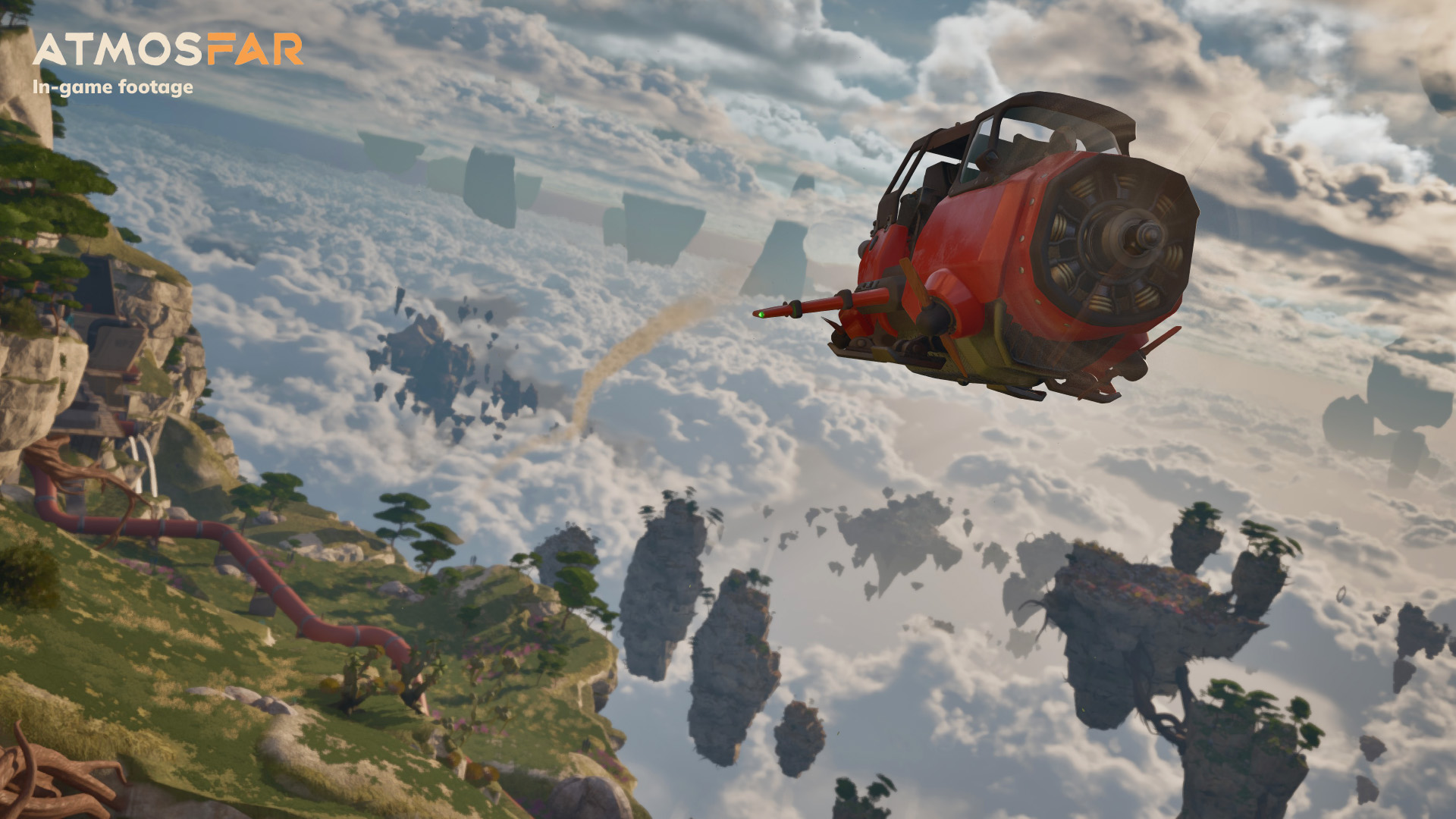
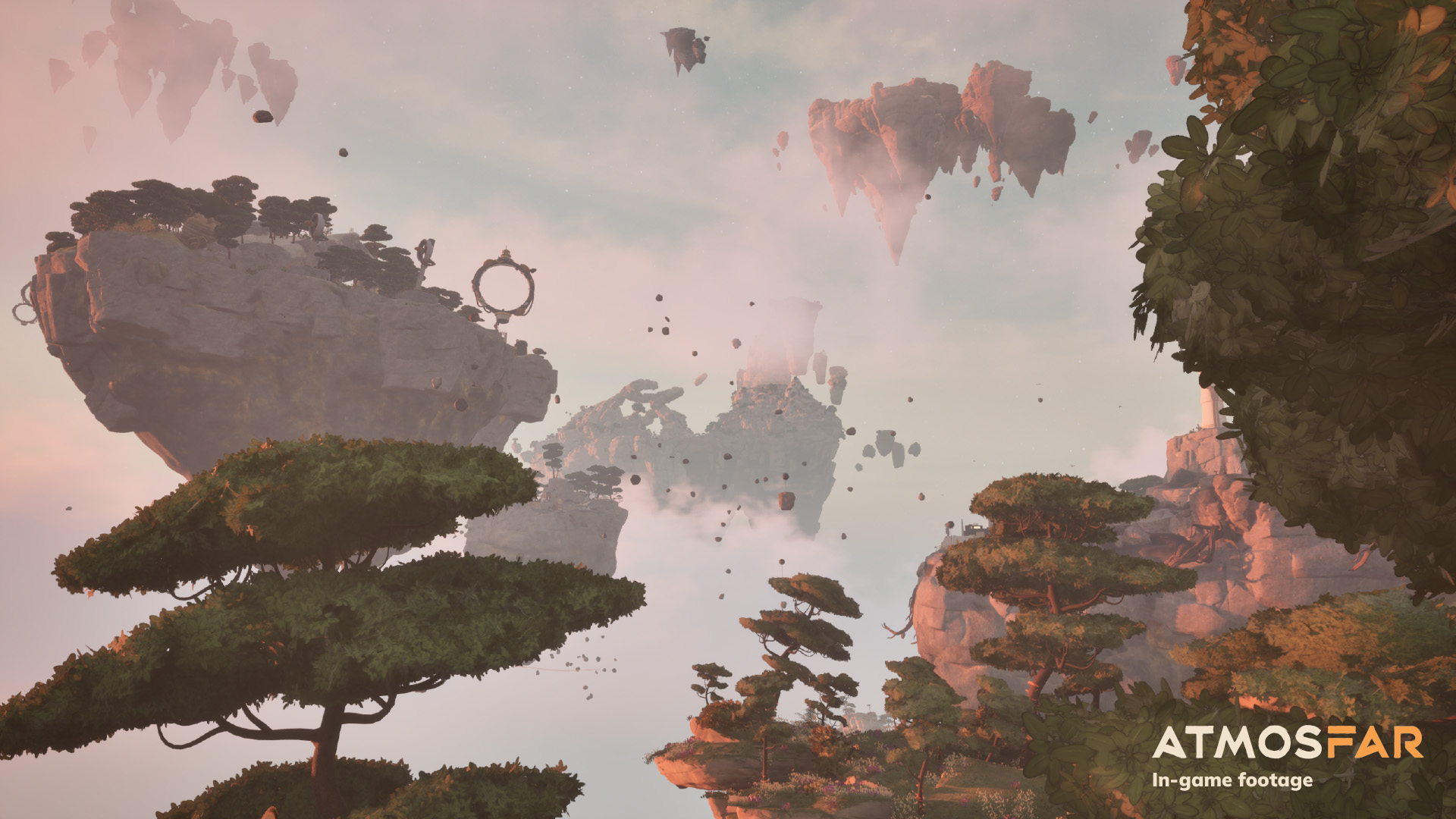
Alright everyone, please keep your arms and legs inside the vehicle. If you hear any monstrous squawking we advise you enter the brace position as we perform combat maneuvers! We are first going to make a fly by of some of the landscapes in Tycos.
A key part of audio concepting and creation is to establish what I call ‘audio lore’. We’ve all encountered video game lore before, right? Whether it is a page in a notebook, an audio log that tells us a little more about our surroundings, or a relic from a bygone civilization that explains the history of a world long forgotten. But, why do we just have to see ‘lore’? Why not hear it too?
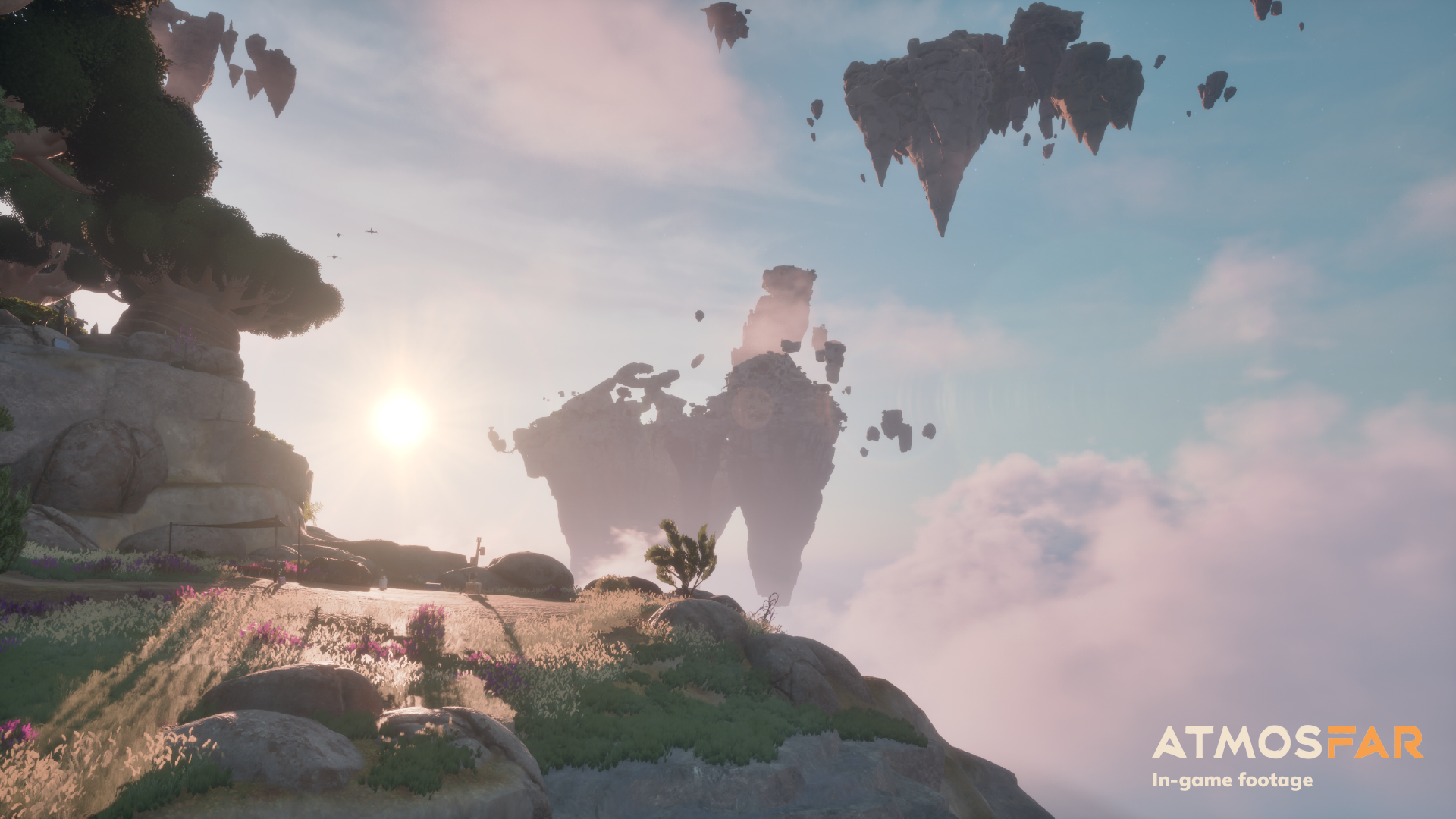
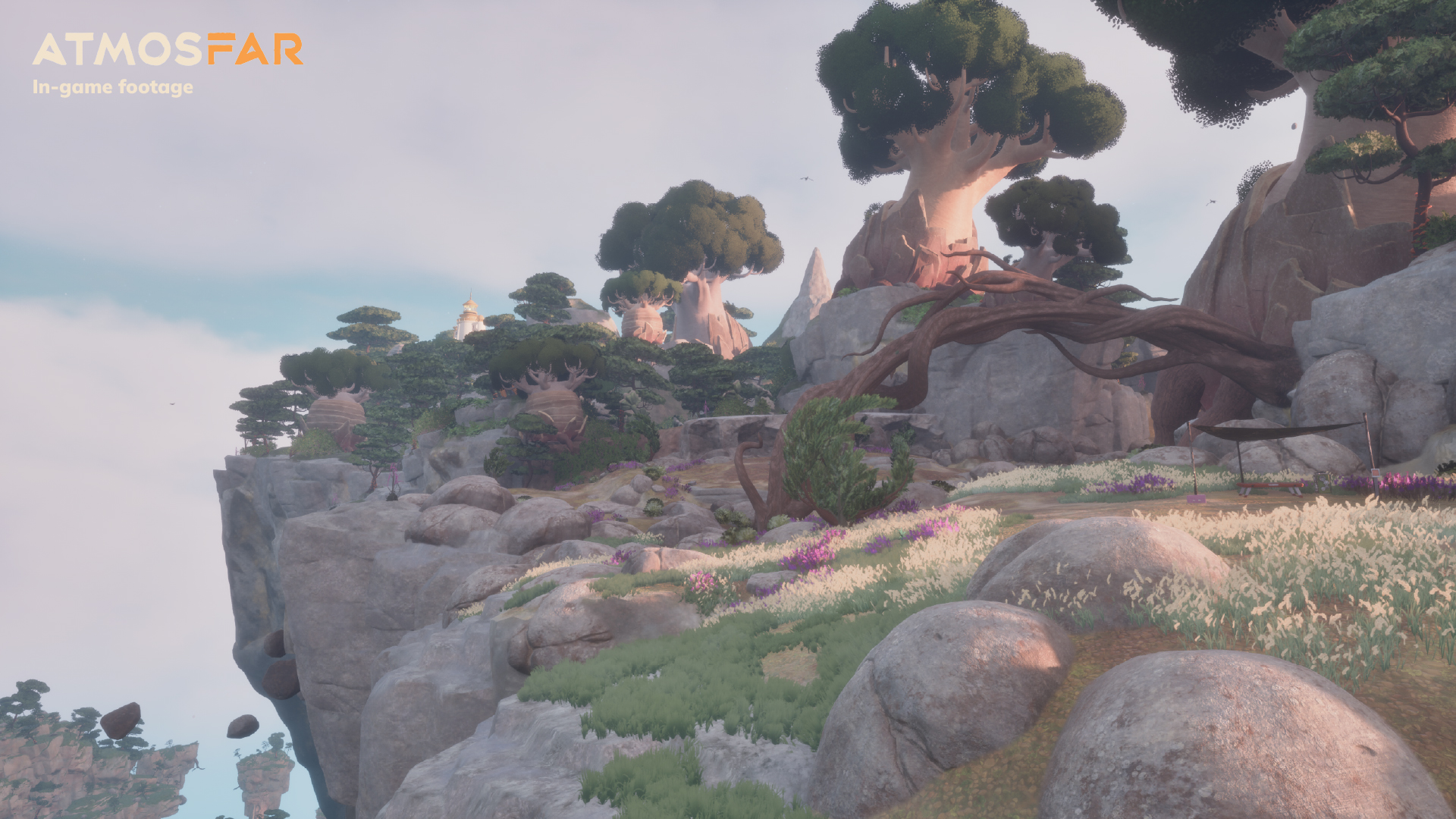
When we first approach an audio pillar of a game we should first reflect on what our world is trying to portray and emphasise this story through sound. ATMOSFAR takes inspiration from the natural world and specifically coastal habitats, with its subtle nautical design of buildings and equipment as well as foliage that is reminiscent of coastlines in Scotland, Patagonia and British Columbia. There is even a touch of British moorlands with heather and moss, something my northern-english connects strongly with. Once we have this basis to work off, we can consider how we can support this scene with our ambient sound. Get your pens out folks, it’s time to get some field notes!
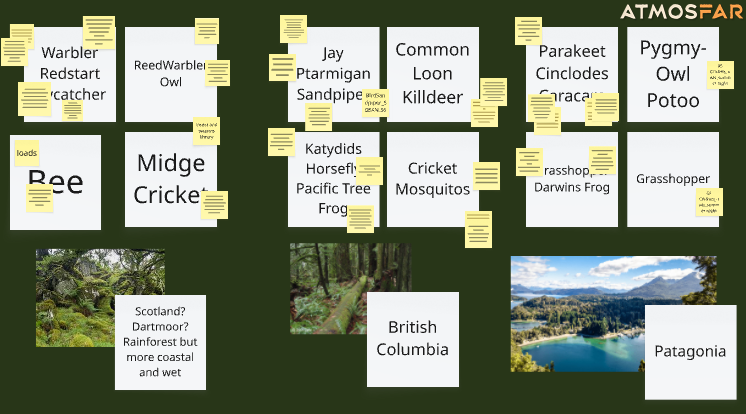
The first step in creating a believable natural environment through sound is to reference the world around us! We as humans are incredibly sensitive to changes in the environment, and sound is no exception, so in order to sell this natural world we need to create it with flora and fauna that actually make sense to exist there. By doing this not only will our world feel natural and immersive, but we also get to subvert that natural soundscape with our more… unique plant and animal life. By keeping the soundscape familiar, the player is even more alerted by sounds that don’t belong, which lets us drive greater curiosity, discovery, and every once in a while a touch of fear. Eyes peeled gang, stay sharp!
After having built up a board of the types of animals and insects we expect to hear in our real-world environments, we can then expand this out with related and soundalike fauna for even more variety that isn’t too unique to stand out to the player. This is the perfect time to shout out the incredible Macaulay Library, which has a database of nearly 150,000 audio recordings of 9,000 animal species, perfect to use as a reference point when gathering ideas for our biomes in ATMOSFAR. What this leaves us with is a huge diversity of natural sound on our islands that feel like a truly natural ecosystem. Quiet down everyone, let’s do some birdwatching.
Now that we’ve seen, and heard, about the islands from a distance how about we get in a little closer? Take us in, and let’s go on an expedition! Tycos is a world filled with life that, while alien, has parallels with the world back home on Earth. The very first piece of ‘audio lore’ on the flora and fauna in ATMOSFAR is that it should very rarely be seen as monstrous, and the Planet Tycos is their world, their habitat. Look, don’t touch! This crucial decision means that, when creating sounds for plants and animals we should ground them in a natural world similar to our own. This will help Tycos feel like a natural planet, rather than a fantasy realm of fantastical creatures, and one where life has evolved to survive and thrive through science and evolution. Let’s go find one of the more friendly animals of this world, shall we?
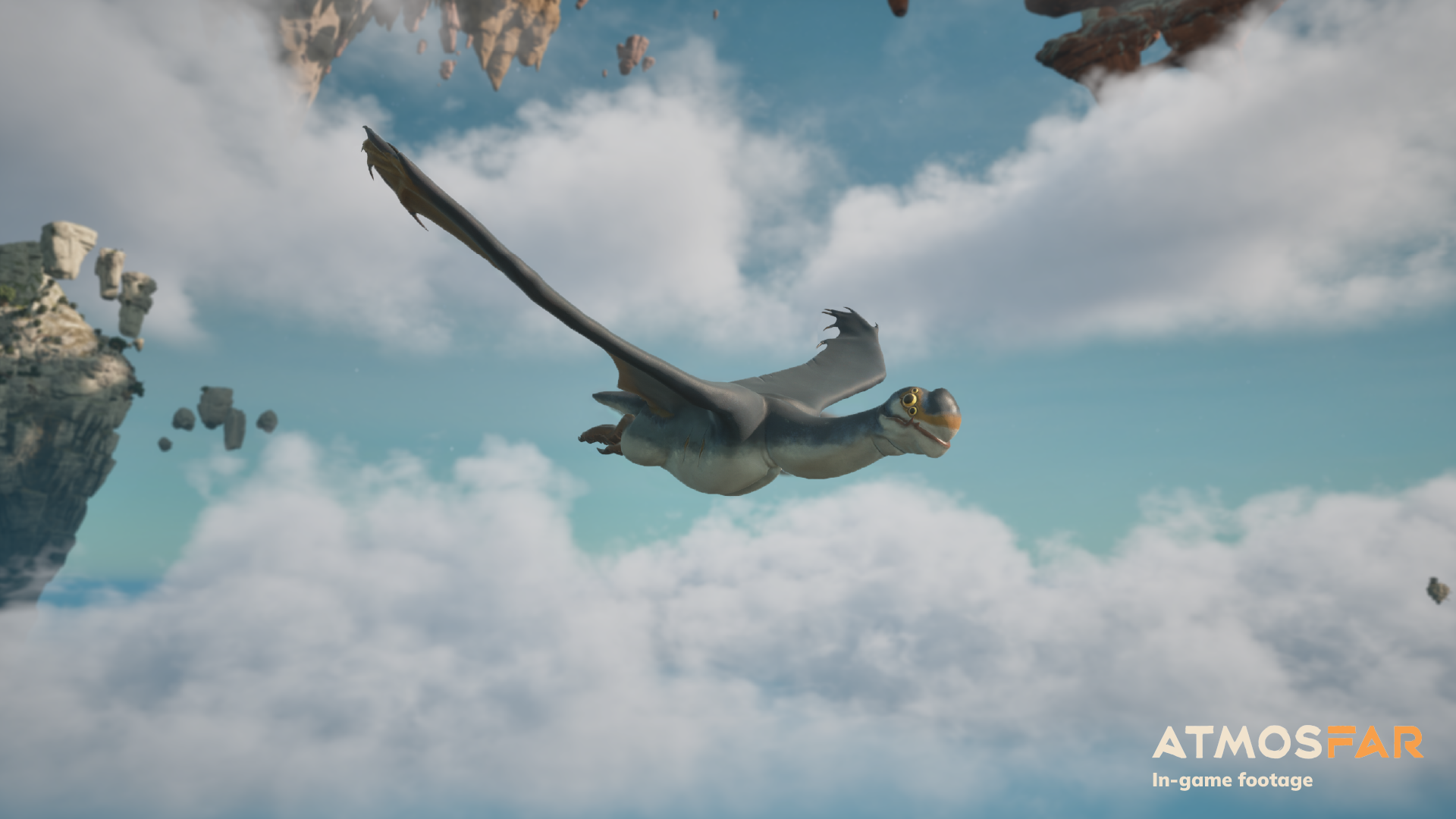
The Mawk is graceful in the skies, with huge powerful wings. It is also the epitome of ‘bird-brained’. With its long neck and bulbous head it is hardly a looker, but its visual appearance allows the team to use its anatomy as a foundation for how it would sound. We know that ATMOSFAR is grounded in coastal environments, so we can firstly consider birds that nest on coastal cliffs around the world. After this we can assess how the long neck bears similarities to geese and swans, although the lack of beak means that there will be a less nasally honk to the animal than our classic silly goose. So let’s go back in time a little, to the age of dinosaurs! Like our dear Mawk, Hadrosaurs had a similarly strange protrusion from their head, only this big lump was completely hollow. There is a theory that this cavity was used like a resonant chamber to produce bellowing honk sounds that were able to travel longer distances than your usual vocal sound. Perhaps the Mawk needed a similar anatomy to warn others of predators, or to sound bigger in order to protect their young? While we don’t actually need to explain any of this, by crafting some ‘audio lore’ and the why of a sound we can make something far better grounded in the world we are making. Looks like there is one flying overhead now, let’s take a listen!
This world is not just a home to animals, not anymore at least. Look over there everyone, it seems we have bumped into one of the natives! Another aspect of ‘audio lore’, is breaking down a scenario or object into its component parts in order to create a detailed and interesting sound. The players themselves are a great example of this, with so much interesting detail and equipment to use as a foundation for our sound design.
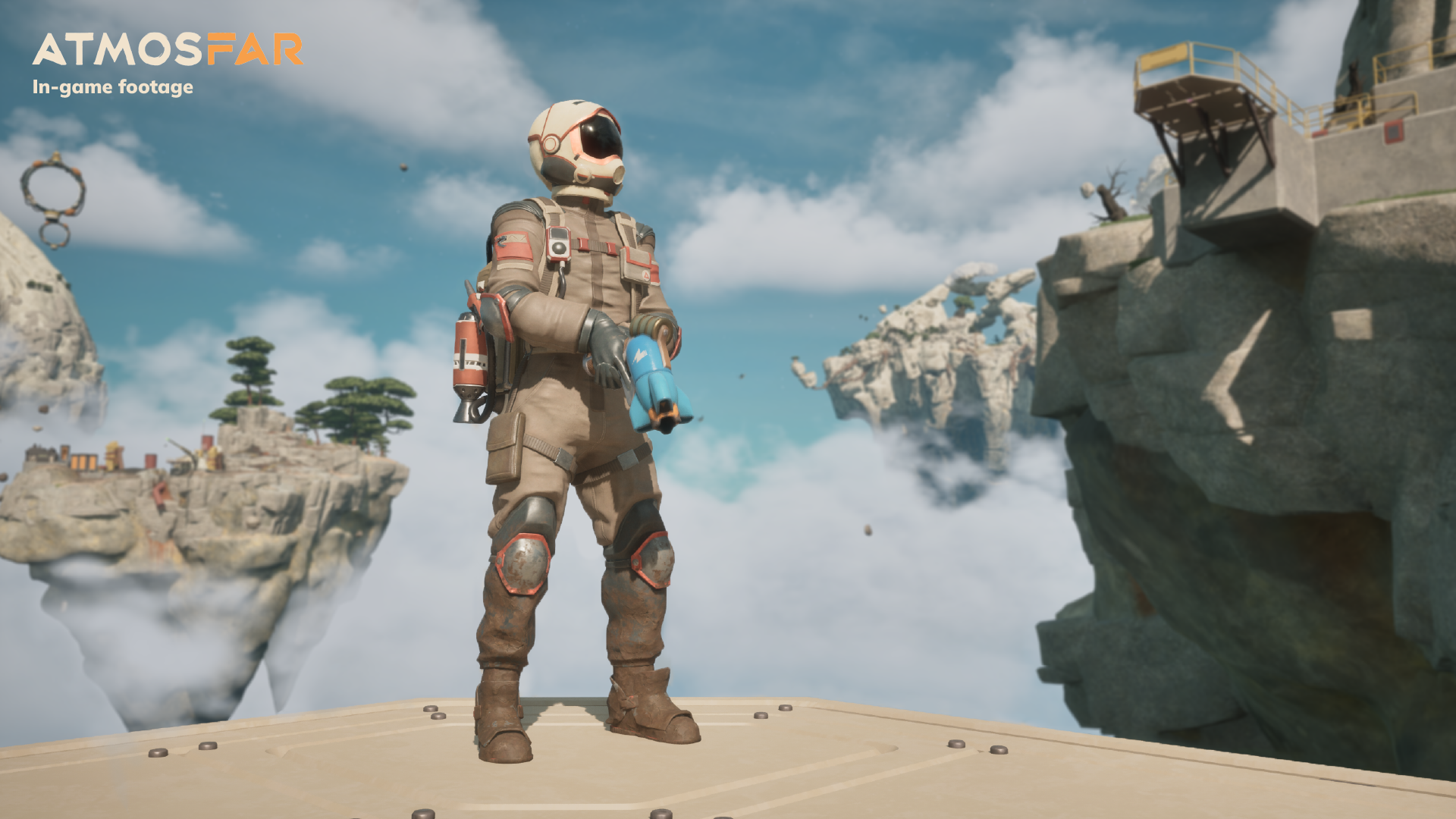
First off let’s look at that flight suit, mostly fabric with lots of pockets and zips along with a bit of rubberised areas to avoid too much wear and tear.
On their back is their backpack which is.. Well, a lot to unpack! The pack is sturdy, likely reinforced by a solid metal frame on the player’s back to prevent breaking important artifacts or squashing their sandwiches.
The backpack itself looks like it is quite simple in design and carries any inventory inside it loosely. Lots of bits and bobs to rattle around as the player is running, jumping and exploring. Importantly from a gameplay standpoint, it would be good for the backpack rattle to reflect how full the player’s pack is. Eventually the player may know exactly how much room they have using sound alone, no need to open the inventory to check!
Attached to the base is the backpack fuel, allowing players to remotely fuel up their Wasp with emergency reserves amongst other machinery. Just like the inventory, we should have some audio clues as to how much fuel we are carrying with us from splashing and sloshing alone!
Finally on our pack is the all important electricity, it powers our tools and is an important lifeline for our players as they traverse the isles. A subtle humming lets the player know that they still have some juice, but as the electricity depletes you may start to notice that the gentle tonal whirring gets more unstable and laboured. Probably time to find a plug socket…
One last little element of the backpack is how your tonal humming harmonises with your crew in multiplayer, driving home the point that exploration really is more complete when you do it together. Perhaps you heard this in our reveal trailer!
Thank you for your time, Vagabond. Let’s continue with our safari!
As we have already said a couple of times, the main purpose of audio in any game should primarily be to support and heighten the player experience. A big part of any exploration game, is of course unveiling the story behind the world they are traversing. Audio can often be something that is only noticed when it is ‘bad’, but otherwise never noticed at all, but this view I think ignores that music and sound can create so much more narrative impact when we want it to. On the flip side of this, we have to be careful. It is easier than you might think to completely change the intended perception of a scene or scenario with ill-considered sound. One wrong move and we can ruin the moment faster than you can say ludonarrative dissonance (which, to be fair, takes a little while to say I guess)! If you imagine Super Smash Bros with hyperrealistic gory crunches on every hit, or The Last of Us but all the clickers are singing Vengaboys, you may get a good idea of what I mean here. Audio matters, even when it doesn’t appear to!
With this in mind let’s take a look at some key players when it comes to the narrative of ATMOSFAR. Things might get a little bumpy everyone, we’re going into hostile territory!
If you look to your left, you’ll see a PACE outpost. Full of resources, but armed to the teeth…
Hopefully by now, you have all heard about some of the key factions in ATMOSFAR and if you haven’t you should read our other blogs and vlogs about them! You, the player, step into the shoes of one of the Vagabonds of Tycos, known as exiles of the PACE regime that teamed up to cobble together a new way of life that seeks to live alongside the natural world and not against it. Let’s talk about PACE and how their story influences their sound.
PACE sits strangely in the world of Tycos. A relic of history that yet carries a unique threat to the player, dilapidated and broken but their influence is still felt by the natural world. Not only does the player need to be informed of the danger that PACE encounters bring through sound, but also reveal a history about them that ties into the unfolding narrative. As a result of this, we treat PACE as its own character in the world as if it were a being, and craft an audio personality that can inform all of the ways the player may experience it in the world. The most common of which may be the drone. Please stay well back, these things pack a punch!
Like a lot of PACE tech, there is a sombre tone to the guard drone when viewed from a distance. It hums along in a melancholic tone, with little chirps and whistles as it patrols indefinitely as it may have for years. The boosters and rotors sound pained and often waver, as if to suggest that this drone may be on its last check of the perimeter. This PACE tech wasn’t made to last this long, it’s military after all, designed for conflict and not long-term operation. It sounds notably industrial, rattly, and inefficient. Don’t underestimate them, one thing you should learn fast on Tycos is that things are rarely as they seem…
The facade of a somewhat pitiful and weak machine is whipped away in an instant the second a player is spotted. It is clear that these drones used to have a working voicebox, loaded up with combat barks and warnings to make instructions perfectly clear to whoever hears them, but any semblance of a human voice is gone. We are left with a deteriorated and wild vocalisation that feels more like a beast than it does a piece of equipment. The guard drone is as much an animal as the fauna surrounding the outpost, and equally dangerous. While heavy and clunky, the firing mechanism aches into life and blasts unrelentingly at the player. Time to go, I think!
The audio is intended to give the player a historical and emotional connection to the drones, and gives a greater sense of curiosity towards the PACE regime and what on Tycos they were doing here. Why would they have deployed such a heavy combat force, and clearly they haven’t been recalled for an age. Where are PACE now?
Over in the Vagabond settlement things sound quite different. Where PACE seems to push against the natural world, the Vagabonds invite it into their lives. Vagabond tech is recycled from PACE, but they have progressed it with new understandings of this world. What this leaves us with through sound are clear influences of PACE technology, but less mechanical and more energy-based. Where PACE drilled into island hydrogen reserves the Vagabonds researched clean nuclear power with the same technology, so while parts may be sonically similar the sound of their power is in harmony with each machine made by the Vagabonds. And no place better represents this harmony than the player’s own camp. Let’s regroup back at base!
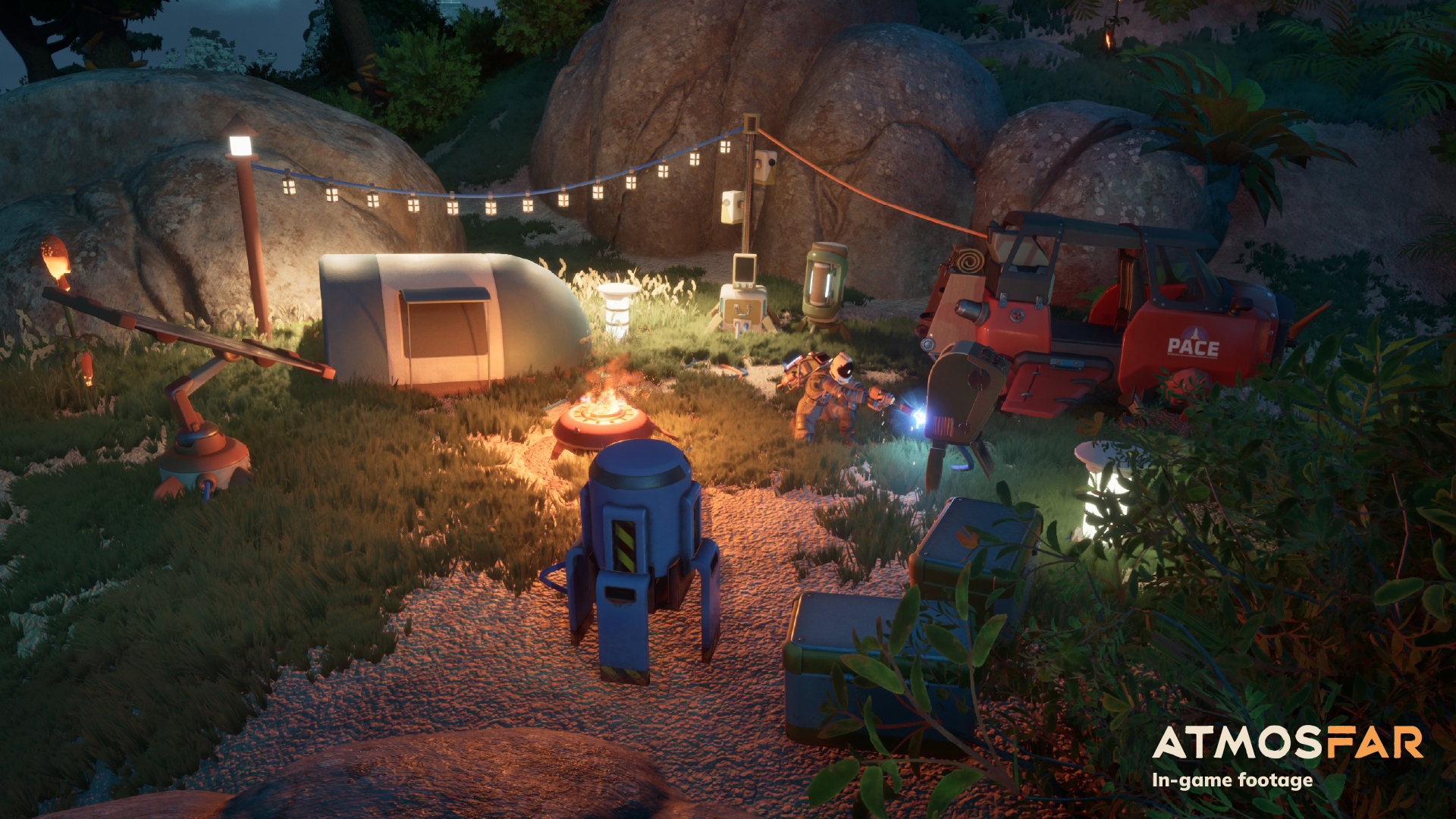
A player’s camp can be their sanctuary, unless they are pitched up by a Maratus hive! Vagabonds, being as resourceful and prepared as they are, tend to venture out with the world on their Wasps. The camp hub, attached to the trusty Utility Wasp, and its components are a good place to hear just how much has changed since the PACE regime. It also takes us into our third and final audio topic. Let’s round off this safari with a bit of Rest, Relaxation and a discussion on sounds that directly support the gameplay and the player.
The Utility Wasp’s camp hub is the player’s source of on-the-go crafting, research and rest, so we can safely assume that this is a gameplay element that will be engaged with frequently and for long periods. As a result, this needs to be one of the most satisfying and enjoyable audio experiences the player can have in ATMOSFAR. Any interaction players have with their own Vagabond-modified equipment has to be engaging and repeatable. With many of these interactions being passive processes, the sound also acts as a crucial message to the player regarding progress, completion and failure of camp machinery around them. Before we get to all that though, let’s talk about ‘machine harmony’ and what on earth that means.
The portable camp in ATMOSFAR is powered by a central camp hub, which distributes electricity to each of the components connected. This hub is the root note of our camp choir, humming along and even getting the antenna involved when connected to the player’s Wasp.
Next in the bass section is our hydrogen refinery, which happily rumbles along in tune with the hub. Notice how whatever component we add builds a pleasant chord of sorts? We want the player experience to feel calm and safe (save for the previously mentioned unfortunate Maratus hive placement) and so the audio experience can’t sound dissonant and tense.
In the non-tonal area of camp components we have the campfire, a crucial cooking resource as much as it is an icon of cozy nighttime chillouts. The flame is powered by natural gas, offering a soft hiss with the fire itself not too intense. This provides a lovely sustained wash of white noise, not dissimilar to sleeping with rain sounds or ocean waves playing in the background.
Next, the lamp. Surely I can’t say that much about a lamp!? Well, you’re right, I can’t. But nonetheless it is neatly tuned to the hub and sure sounds nice to me!
Into the proper machinery, and what could be considered more of a rhythm section to our choir... or, orchestra I guess? Let’s bring in some of our crafting, refining and processing modules. Notice how none of these processes are ‘loud’? There is an intentional approach here to ensure nothing stands out too much, leaving the player to enjoy the overall soundscape that is created.
There are tons more things we could look at but that is for another day. Let’s instead end with the all important question, what happens when the power runs out? Exactly like we said previously, sound often sticks out only when it is incorrect. Or, in this case, sound can stand out when it is stopped abruptly. From a player perspective the moment the power is gone, and our camp falls eerily silent, is a really sudden and unnerving feeling. What was once safe and cozy is threatening, and the player gets a very explicit gameplay incentive to get the power back ASAP!
But, once the power is back up and running, that cozy feel comes right back. ATMOSFAR, I believe, is built on these moments of contrast. It is the goal of the audio team here to present a soundscape that can have a profound effect on a player’s emotions. Whether it is serenity by a campfire, wonder when looking over a natural vista, or panic in a deep cavern with creatures lurking in the darkness, audio has the power to emphasise a moment to really give that feeling that the player has been transported to a new and exciting land light years from their own. That’s all for today’s safari folks, time to sit back and enjoy the tranquility.