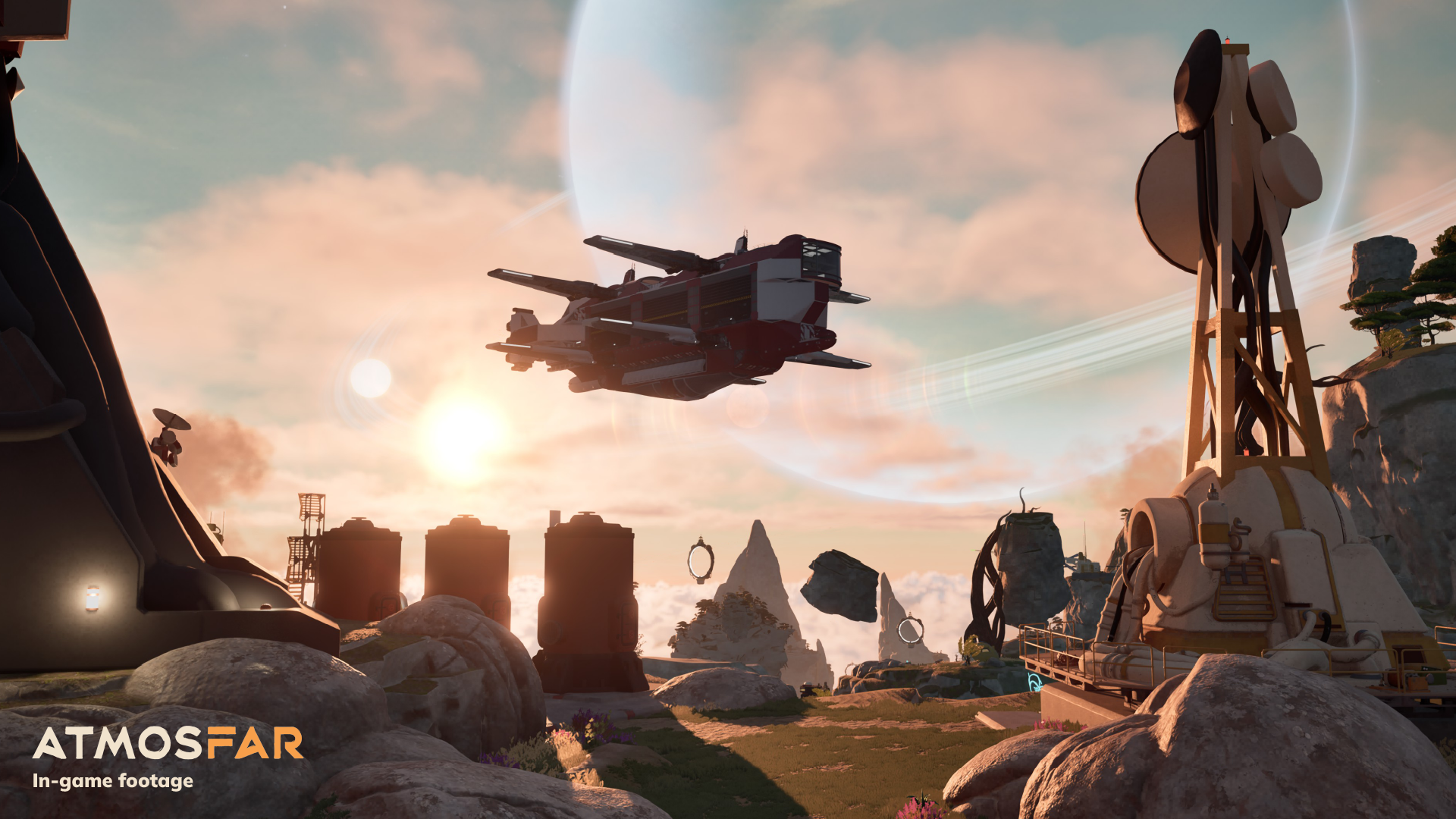
All in-game footage in this blog post comes from an EA beta build and may differ from the final game.
Not a fan of reading? Watch the dev blog in a vlog format here instead! 👆
Greetings, Vagabond!
School’s out for summer! Sun is out, people are at the beach, and the Apog team is… inside! Working on ATMOSFAR! Where else would we be? Well… some of us actually do have vacation, so this blog will we a bit shorter than usual.
About two months have now passed since we announced that we’re postponing the game. This means that there is… even less time left before ATMOSFAR releases into Early Access! Wohoo!
Well, you kind of already know the drill by now: We’re continuing to polish and tweak the game to get it as balanced, beautiful and fun as possible. What a shocker! Instead of giving you brief explanations of the overall development, we want to continue to give you more in-depth descriptions of some of the various aspects of the game that we’re working on. In our last blog post, we took a deep dive into level art. Today we’re focusing on an adjacent topic: Concept art!
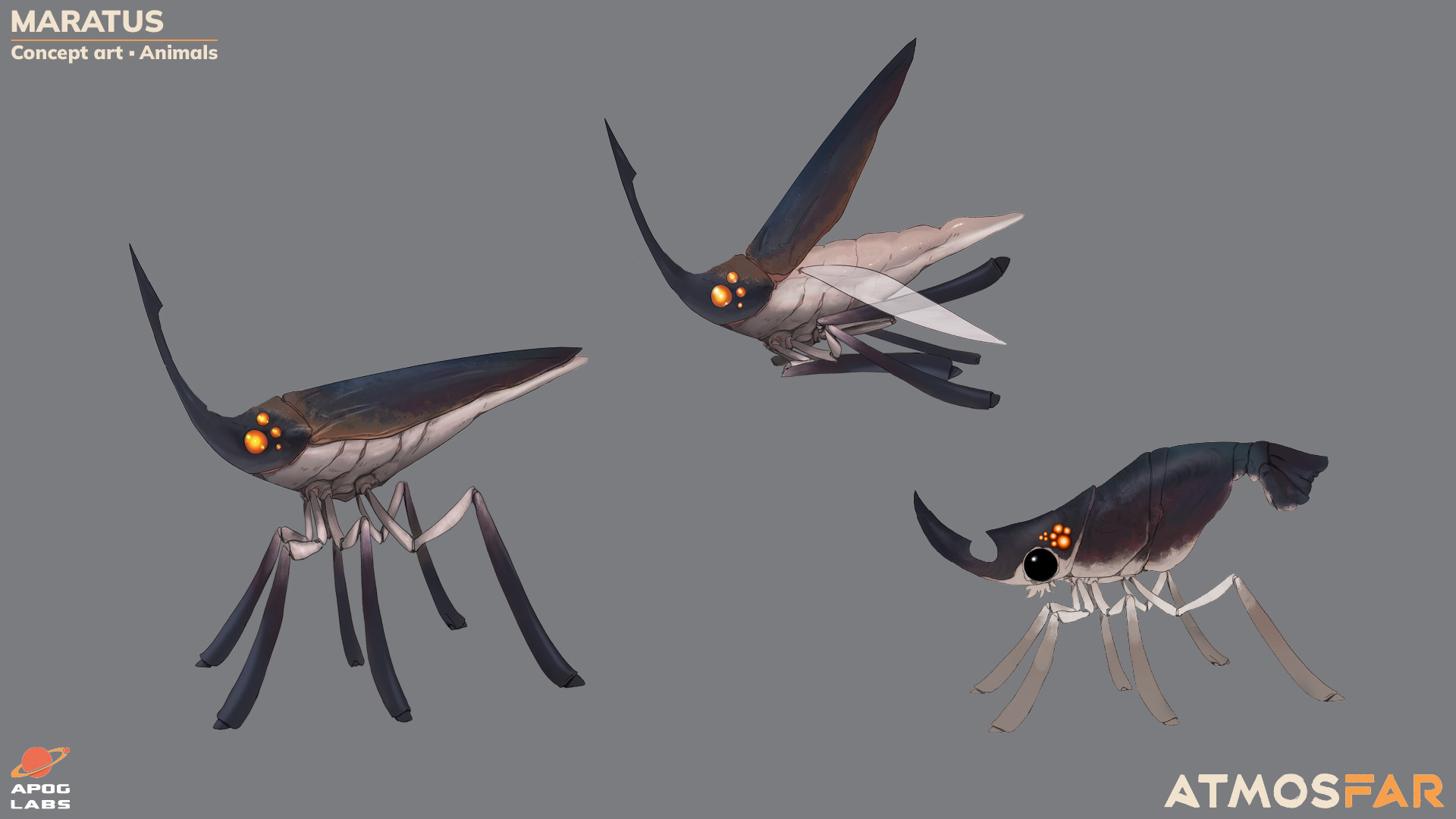
Instead of reading about what our Community Manager thinks a Concept Artist does, you’re going to hear it all straight from the source! Today, our Concept Artist (yes, the only one at the studio!) is sharing her thoughts and reflections on her job. Take it away!
“Hi!! I’m the artist! I’ve been asked to explain my job, which is actually harder than one might think (my parents still don’t understand it, for example…), and give y’all some insight into my part of the game making process!

I’m a Concept Artist, which means my job is to come up with interesting designs for the game. My main way of doing this is through sketches, drawings and paintings. The reason why it’s done in 2D like that is that it’s much quicker and easier to test ideas this way. So instead of having our 3D artists build everything from scratch just to realize that we don’t like it, I’ll just paint what it could look like and save everyone a lot of time to ensure that the 3D artists can focus their energy on making amazing looking models. By working in 2D, we can also test multiple ideas in very quick succession, which makes us more likely to arrive at a design we really really like. So while concept art consists of a lot of drawing and painting, it is more than just that! It’s a way to test new ideas and solve problems visually.


I work very closely with our Art Director, whose job it is to set the tone for the game visually and create the unique visual style that we want ATMOSFAR to have. He plans the artstyle, the color palettes, and the overall feel and tone of the nature, animals, factions, tech, UI etc. He lets me know what the goal is for a particular design, how it should feel, what colors could work and so on and sometimes gives me inspiration pictures or references to use as a starting point. After that I usually have free reign to use my imagination. My favorite part is the early stages where I just brainstorm and try out a lot of different things. It’s perhaps a bit surprising, but I’ve found that an important skill to have when you do this kind of work is grit and persistence, maybe more than technical artistic skill (though that is obviously very important too). As artists, I think there is a tendency to want to give up if your first idea doesn’t pan out the way you wanted it to. I’m certainly guilty of this when I draw things in my free time. But with concept art, it’s necessary to continue pushing even if the first couple of things turn out bad or less than ideal. That’s how you get to the good and really good ideas!
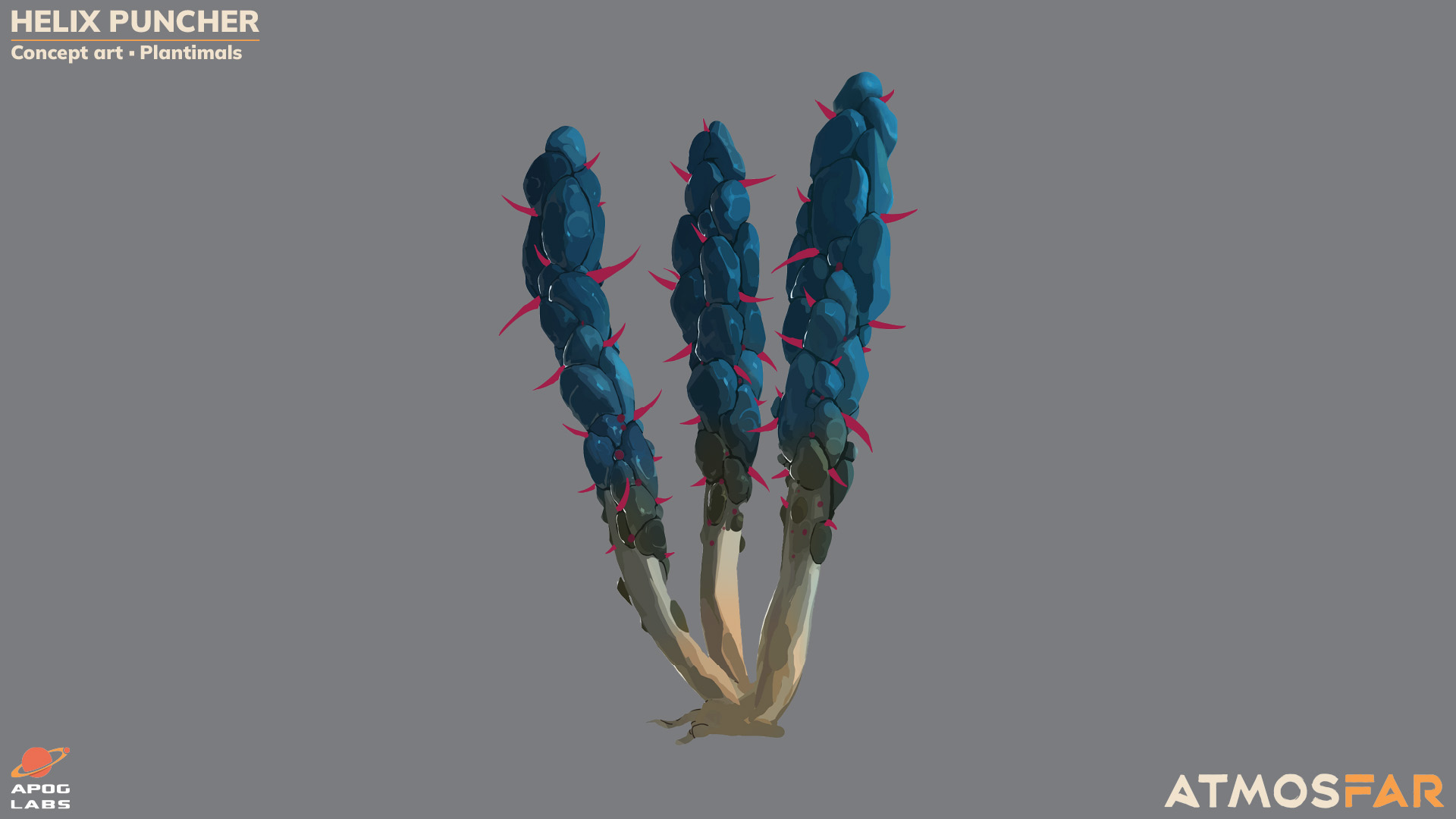

For me the most fun thing to work on with this project has been the environment and the animals (but designing the character was very fun too!). There is something about getting to breathe a bit of life into a new world that is incredibly rewarding. I especially enjoy creating various animals for the game world as well. Speculative biology (imagining what life could look like on other worlds) is a hobby of mine, so crafting new species and figuring out how they might fit into their specific ecological niches while being visually appealing and fit the game design requirements is a very fun challenge. Designing plants and landscapes is fun too, but I love how in the end the creatures become a core feature the player interacts with, it’s a bit more dynamic.
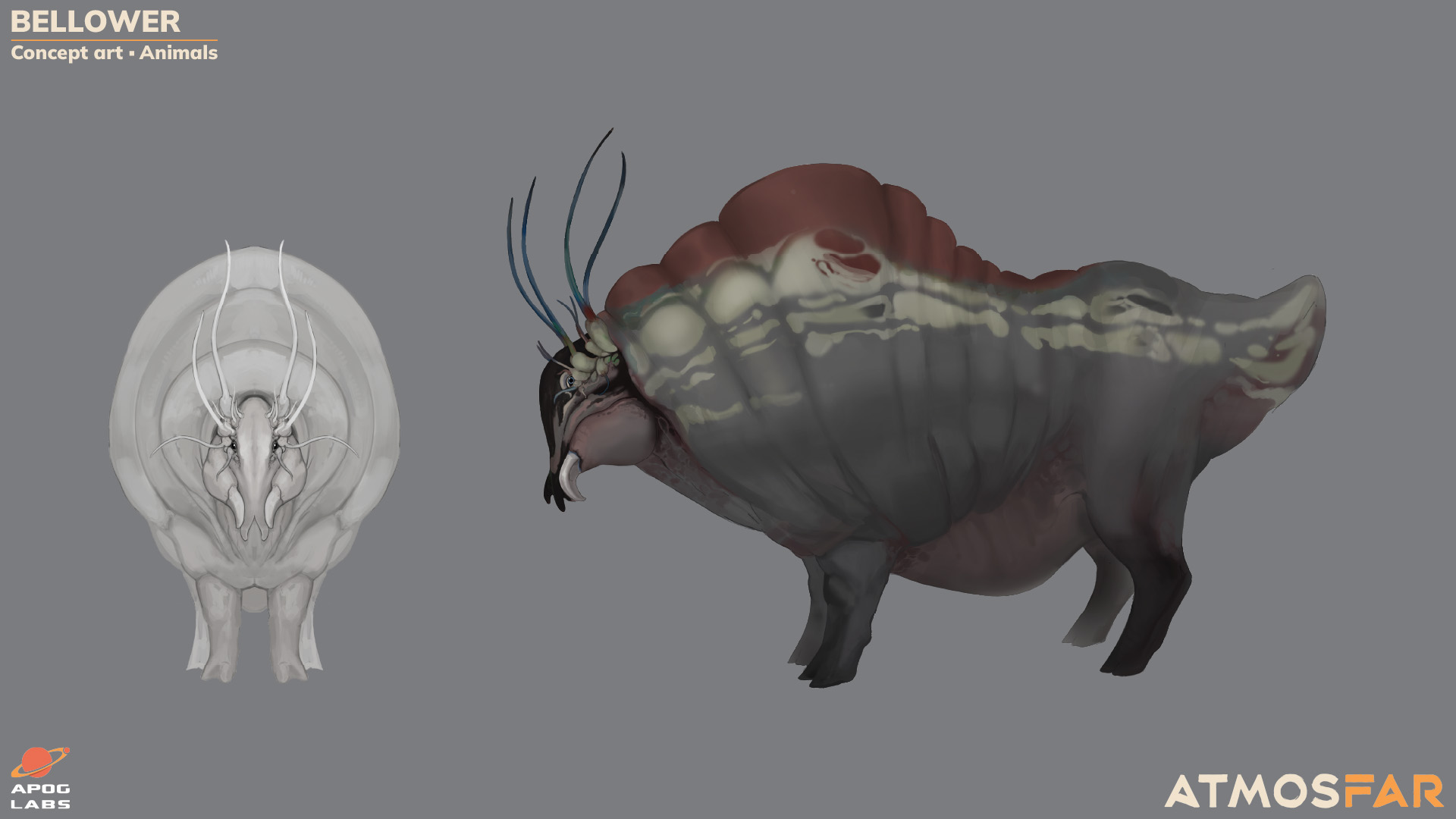

I’m very eager to see what the players will have to say about this world that we have crafted! This will be the very first game I work on that gets released, and after spending years on the designs and slowly seeing it all come together to form this unique and, if I say so myself, beautiful world, it’s both nerve wracking and very exciting that people soon will be able to experience it for themselves! I really hope you will enjoy exploring it as much as we’ve enjoyed creating it!”
Woah, there definitely is more to concept art than what might meet the eye! Let’s give it up for our incredible Concept Artist!
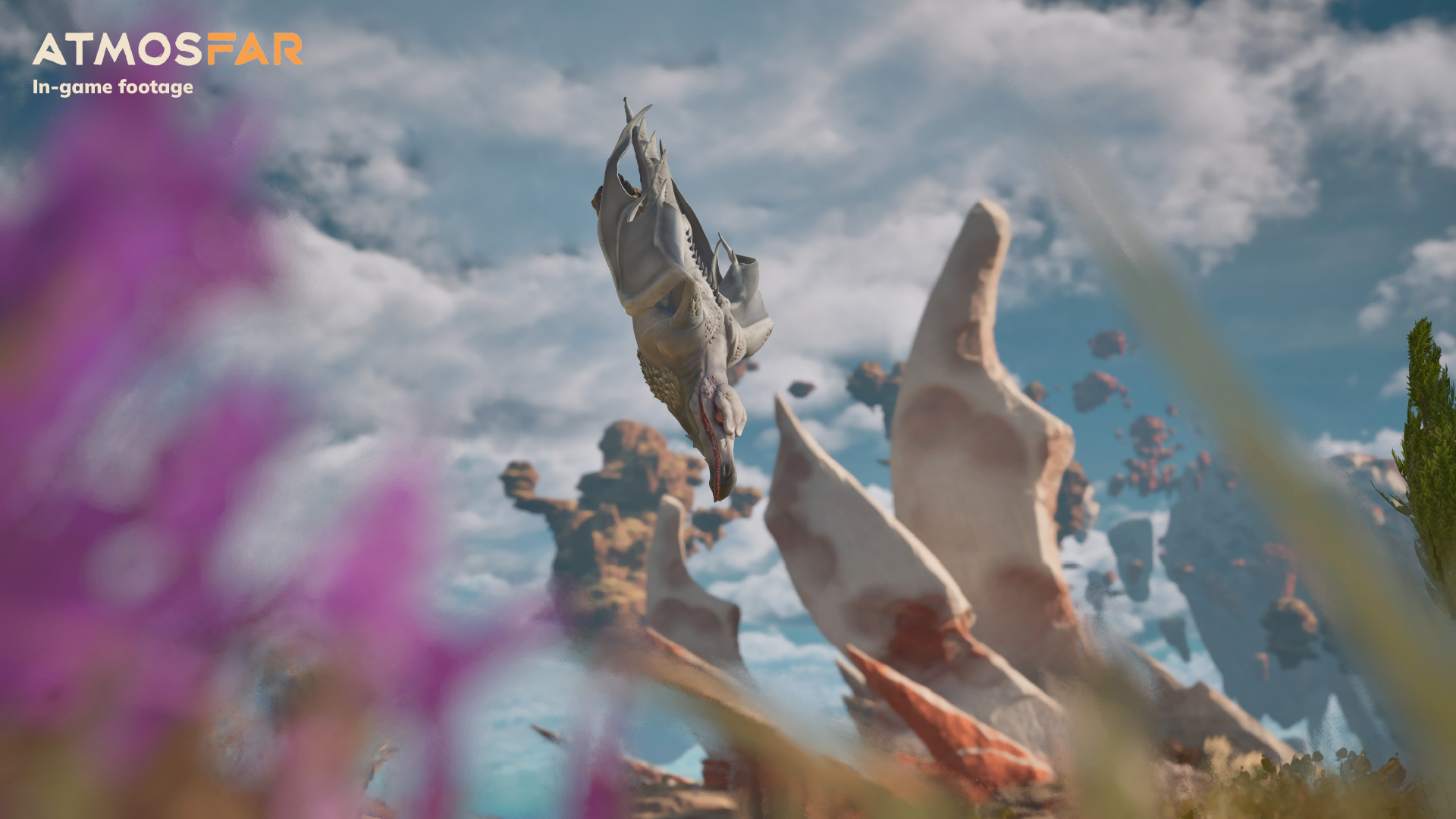

One thing we’re constantly working on when it comes to creating the world of Tycos, is the balance between “alien” and “familiar”. Tycos is a planet far out in space, light years from planet Earth. This needs to be conveyed through our art direction, and it needs to be alien enough for players to want to continue to explore and experience the strange flora and fauna that make up the planet. At the same time, the vegetation, animals and all other elements need to be familiar enough for the player to understand what they’re looking at. Trying to orient oneself in a world where literally nothing is recognizable would only frustrate and wear out the player (or might be an idea for a new game?!). As explained by one of our Level Artists in our previous blog post, the environment itself serves as a support for gameplay by highlighting mechanics, drawing attention to important areas, and helping players understand what actions are available to them. Utilizing for example vegetation and animals as cues is only doable if they’re understood by the player.

Using both familiar and foreign elements together can also be a way to make the alien features stand out even more, as explained by our Audio Lead Joe in an earlier dev blog: “The first step in creating a believable natural environment through sound is to reference the world around us! We as humans are incredibly sensitive to changes in the environment, and sound is no exception, so in order to sell this natural world we need to create it with flora and fauna that actually make sense to exist there. By doing this not only will our world feel natural and immersive, but we also get to subvert that natural soundscape with our more… unique plant and animal life. By keeping the soundscape familiar, the player is even more alerted by sounds that don’t belong, which lets us drive greater curiosity, discovery, and every once in a while a touch of fear.”

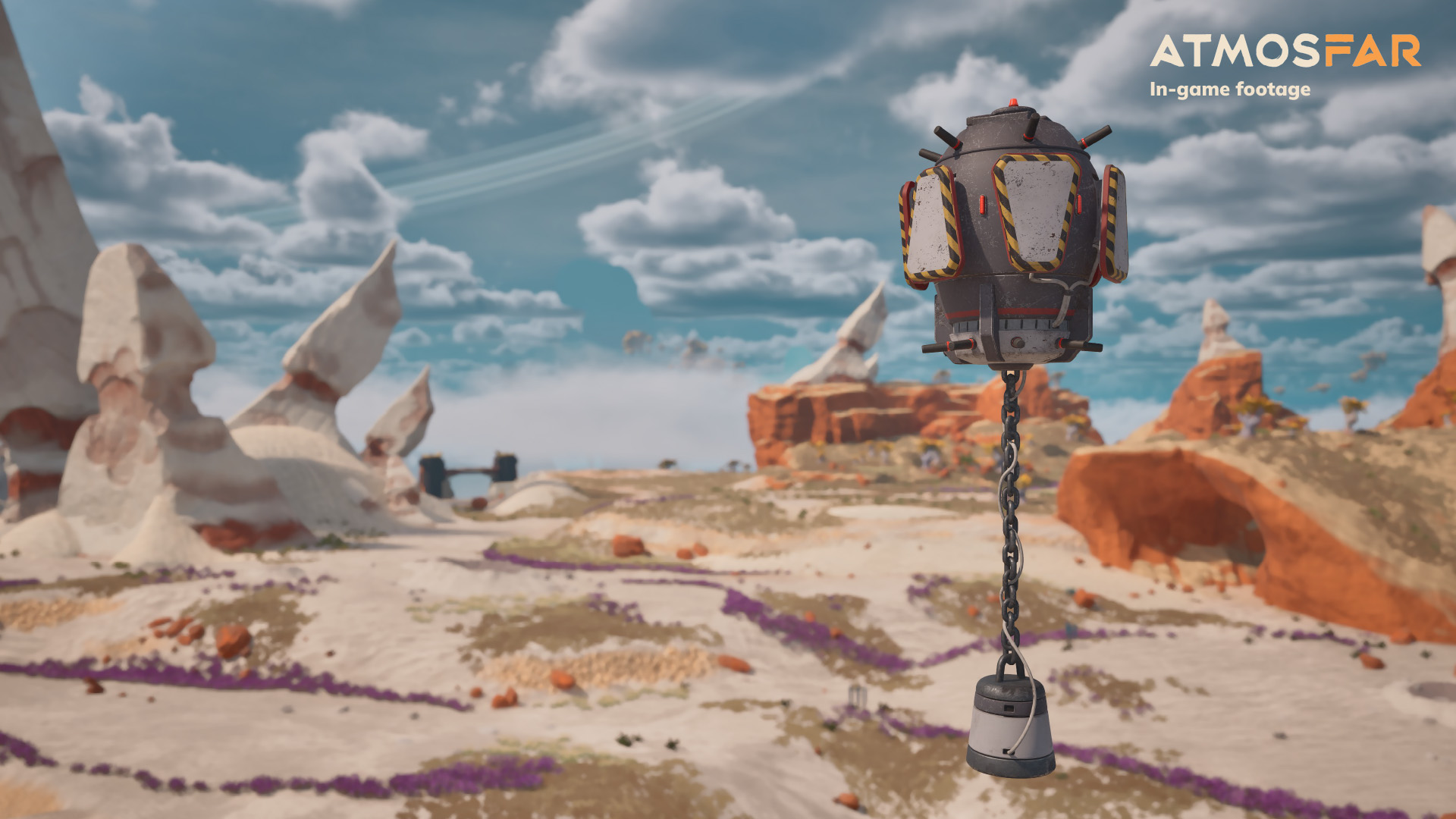
On the topic of the creative processes behind ATMOSFAR, we’d also like to point out that everything in the game is completely hand made by the team here at the studio. This includes everything from the first, rough sketches to the final, polished model for the game. We believe that coming up with your own ideas and executions stimulates creativity, which then makes it easier to come up with even more, or new things. As our Concept Artist just said: “it’s necessary to continue pushing even if the first couple of things turn out bad or less than ideal. That’s how you get to the good and really good ideas!”
As you’ve noticed, if you ask us about art, or well, any aspect of the game ever, we will go on for hours and hours about it. Guess that’s what happens when you’re really passionate about something! Believe us when we say that we have a lot of other, in-depth topics we’d like to share with you all. But that’s going to have to wait until later. If we don’t stop this dev blog anytime soon it won’t be shorter than usual, like we promised in the beginning!
We’re soon going to ramp up to our usual speed again, but first, the Apog Labs team needs a well deserved break. However much fun it is to develop, progress and create, rest is important! And that goes for all of you as well. We hope that you have a wonderful summer, and that you come back well rested and ready to take on Tycos!
Happy summer!
// Apog Labs